 Organic fertilizer equipment,organic fertilizer production line,organic fertilizer equipment factory

What is the difference between a vertical crusher and a horizontal crusher
515There are significant differences between vertical and horizontal crushers in multiple aspects. The following is a specific comparative analysis:
View detailsSearch the whole station
An organic fertilizer granulator converts prepared organic fertilizer material into uniform granules that are easier to store, transport, apply, and sell. It is one of the most important machines in a complete organic fertilizer production line.
Its performance depends on compost quality, material moisture, particle size, mixing uniformity, feeding stability, and the equipment selected for drying and screening. A well-designed production process can improve granule strength, reduce powder, and maintain stable output.
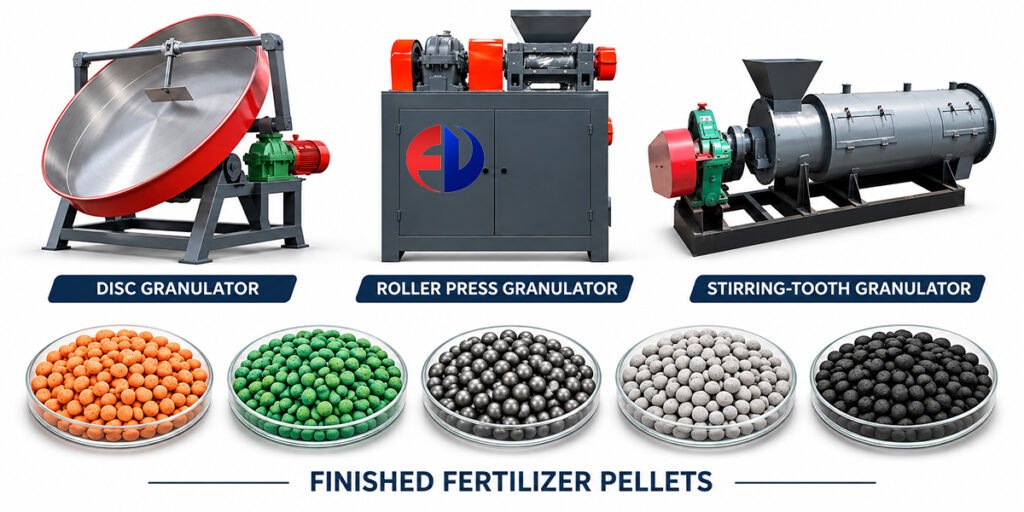
An organic fertilizer granulator shapes loose fertilizer powder or semi-wet organic material into particles of a controlled size. Depending on the machine type and formula, the final fertilizer may be produced as round pellets, irregular granules, or compacted particles.
Granulation can improve:
The suitable granulator depends on the material properties and the required product. A machine designed for composted manure may not be suitable for dry compound fertilizer or materials with a high mineral content.
A stable granulation process normally includes the following steps.
Animal manure, crop residues, food waste, and other organic materials usually need to be composted before granulation. Fermentation stabilizes the organic matter and helps reduce odor.
The compost should be mature enough for further processing. If the material is too fresh, too sticky, or too fibrous, it may block the crusher, reduce granulation efficiency, or produce weak particles.
A composting system may include:
After composting, the material is crushed into smaller particles. A uniform feed size helps the granulator form more consistent particles.
Common crushing equipment includes:
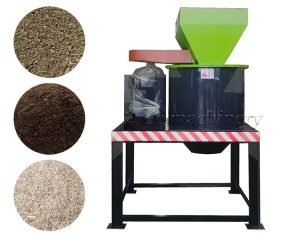
For wet compost and manure, a semi-wet material crusher is often considered because it can handle materials that are difficult to process with ordinary dry crushers.
The crushed material may be mixed with other organic materials, mineral nutrients, binders, or moisture regulators. A mixer helps distribute the ingredients evenly before granulation.
A production line may use:
If the formula is not mixed evenly, the finished granules may have differences in color, nutrient content, moisture, and strength.
Moisture is one of the most important factors affecting granulation. If the material is too dry, it may be difficult to form particles. If it is too wet, the granules may stick together, deform, or require excessive drying.
The ideal moisture range depends on:
Moisture should be adjusted based on production tests rather than using the same value for every raw material.
The prepared material enters the organic fertilizer granulator. The machine uses pressure, rolling, stirring, centrifugal force, or a combination of these actions to form particles.
The operator should monitor:
Stable feeding is essential. Sudden increases or decreases in feed can cause uneven particle size and unstable output.
Freshly formed granules may contain excessive moisture and may still be warm. A rotary drum dryer can reduce moisture, while a cooler lowers the product temperature before screening and packaging.
The drying system should be matched to:
Excessive drying can increase energy consumption and may damage some nutrient components. Insufficient drying can result in caking during storage.
A screening machine separates qualified granules from oversized and undersized particles.
The usual process is:
Recycling improves material utilization and helps maintain a consistent final product.
A disc granulator uses a rotating inclined disc to form round particles. It is often used for small and medium-scale organic fertilizer production.
Advantages include:
Its performance depends strongly on moisture, feeding stability, and material preparation.
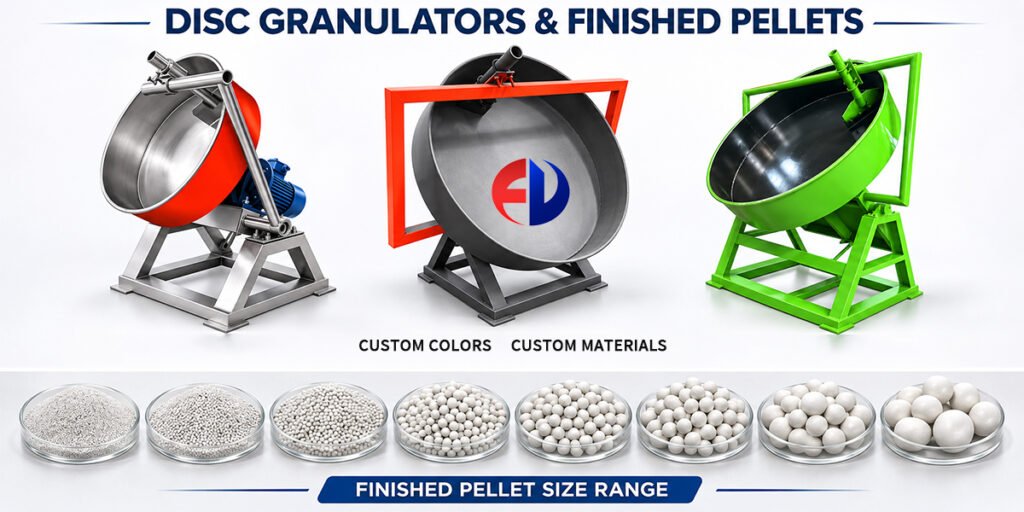
A rotary drum granulator uses a rotating drum to combine and form fertilizer particles. It is suitable for continuous production and larger fertilizer plants.
Typical benefits include:
The complete system may require a dryer, cooler, screening machine, dust collector, and supporting conveyors.
A stirring tooth granulator uses high-speed stirring action to form particles from suitable organic materials. It can be used for certain compost and manure-based fertilizer applications.
Before selecting this machine, the material should be tested for moisture, fiber content, stickiness, and particle-forming performance.
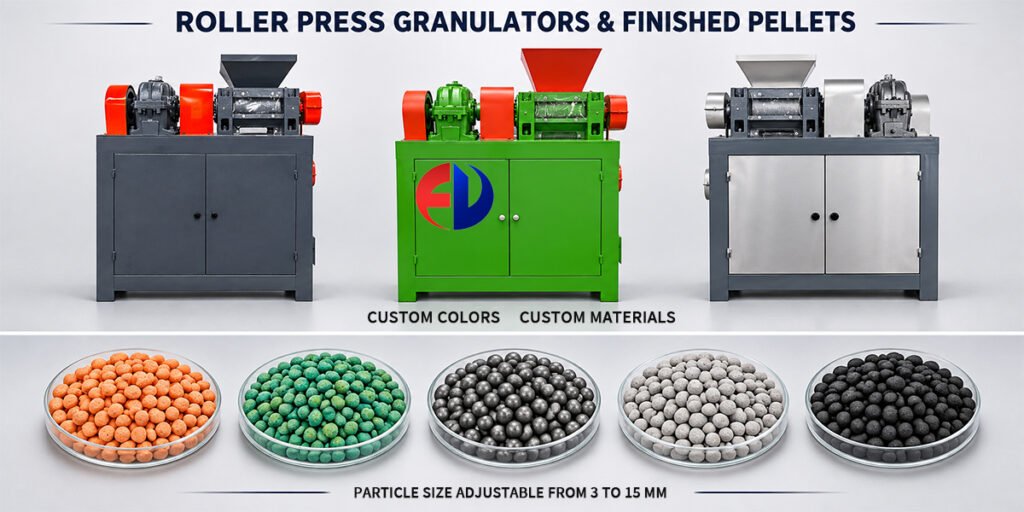
A roller extrusion granulator forms fertilizer particles through pressure between two rollers. It is often used for materials that can be compacted without a traditional wet granulation process.
It may be suitable when the project requires:
The final choice should be based on the fertilizer formula and required product quality.
Remove stones, metal, plastic, and other impurities before crushing and mixing. Foreign materials can damage the crusher and granulator.
Large particles make it difficult to produce consistent granules. Crushing and screening should create a stable feed for the granulator.
Add water or liquid material gradually while mixing. Sudden moisture changes can create sticky lumps and uneven granules.
Overloading increases motor load and may cause poor particle formation, blockages, and unstable output.
The granulator should receive material at a stable rate. An inconsistent feed can cause large variations in particle size.
Too much recycled powder may change the moisture and formula of the feed. The recycling ratio should be managed according to production tests.
The dryer should be selected according to the actual wet granule output. A dryer that is too small can create a bottleneck, while an oversized dryer may increase investment and energy use.
| Problem | Possible cause | Recommended action |
|---|---|---|
| Too much powder | Material too dry, poor mixing, unstable feed | Adjust moisture and improve mixing |
| Granules stick together | Excess moisture or excessive liquid addition | Reduce moisture and improve drying |
| Large particle size variation | Uneven feeding or poor screening | Stabilize feeding and check screen mesh |
| Weak granules | Poor formula, insufficient compaction, unsuitable moisture | Test the formula and adjust operating conditions |
| Granulator blockage | Wet sticky material, foreign objects, overload | Remove impurities and reduce feed rate |
| High energy consumption | Excessive moisture or inefficient drying | Improve composting and optimize dryer operation |
| Low output | Incorrect machine selection or unstable upstream process | Recheck capacity and complete process flow |
Before requesting a quotation, prepare the following information:
A manufacturer may also request a material sample for testing. A small production test can help determine whether the material requires a disc granulator, rotary drum granulator, stirring tooth granulator, roller extrusion granulator, or another solution.
A complete line is recommended when the project requires stable commercial production. In addition to the granulator, the system may include:
For a small farm or pilot project, a simpler configuration may be sufficient. For a commercial fertilizer factory, the complete process should be designed as one coordinated system.
You can view our product overview of the organic fertilizer production line.
There is no universal best machine. The correct choice depends on the raw material, moisture, formula, production capacity, granule size, and required particle shape.
Fresh manure usually requires composting and moisture adjustment before granulation. Direct processing may cause blockages, unstable particles, and storage problems.
Soft granules may be caused by excessive moisture, insufficient compaction, poor formula adjustment, or inadequate drying. The feed material and complete process should be checked together.
Many granulators can produce different particle sizes by adjusting operating conditions, disc angle, roller gap, feed rate, or screening equipment. The adjustment method depends on the machine type.
Send the manufacturer your raw material type, moisture content, required capacity, target granule size, and final fertilizer formula. A customized recommendation is more reliable than choosing a machine based only on its name or advertised capacity.
An organic fertilizer granulator is the central forming machine in many fertilizer production lines, but granulation quality depends on the entire process. Composting, crushing, mixing, moisture adjustment, drying, screening, and recycling must work together.
The best granulator is selected according to the actual material and production target. Before purchasing, test the raw material, confirm the required capacity, and request a complete process design that includes supporting equipment and operating conditions.
Fude Machinery provides organic fertilizer granulators and customized complete production-line solutions.
Contact us with your raw material, capacity, and product requirements to receive a suitable equipment recommendation.
There are significant differences between vertical and horizontal crushers in multiple aspects. The following is a specific comparative analysis:
View details
If you work in the organic fertilizer industry, you know the biggest challenge is your raw material. It is often wet, sticky, and lumpy. A Semi-Wet Material Crusher is the specialized machine engineered to solve this exact problem. We are Fude Mac...
View details
Urea is a widely used nitrogen fertilizer in modern agriculture. Due to its high nitrogen content, it is an important plant growth promoter.In order to improve the efficiency and ease of use of urea, the technology of urea powder granulation has b...
View details
With the development of cow breeding industry, cattle littter dispoal has been a difficulty for farm owners. There are two methods are commonly used by them for cow waste management. In recent years, through the construction of biogas di...
View details