An organic fertilizer production line converts animal manure, crop residues, compost, food waste, or other biodegradable materials into uniform fertilizer products. A complete line normally includes raw material handling, composting, crushing, mixing, granulation, drying, screening, cooling, coating, and packaging equipment.
The actual process and investment depend on the raw material, moisture content, required capacity, fertilizer type, granule size, automation level, and local installation conditions. This guide explains the complete production process, the main equipment required, and the factors that determine the cost of an organic fertilizer plant.
An organic fertilizer production line is a connected group of machines designed to process organic waste into marketable fertilizer. The line can produce powder fertilizer, granulated fertilizer, or polished round pellets.
A typical line may process:
Chicken manure
Cow manure
Pig manure
Sheep manure
Poultry litter
Crop straw
Mushroom residue
Food-processing waste
Sludge and other organic materials
Before selecting equipment, the raw material should be tested for moisture, fiber content, impurities, nutrient composition, and seasonal availability. These factors determine the most suitable process and machine configuration.
Organic Fertilizer Production Process
Although the exact layout varies by material and product, most commercial projects follow the steps below.
1. Raw Material Collection and Feeding
The raw materials are collected, transported, and fed into the production line. A loading system, shovel feeder, hopper, conveyor, or feeding bin can be used depending on the material and plant layout.
The feeding section should provide a stable flow of material to prevent overloading downstream machines. Large stones, metal parts, plastic, and other impurities should be removed before processing.
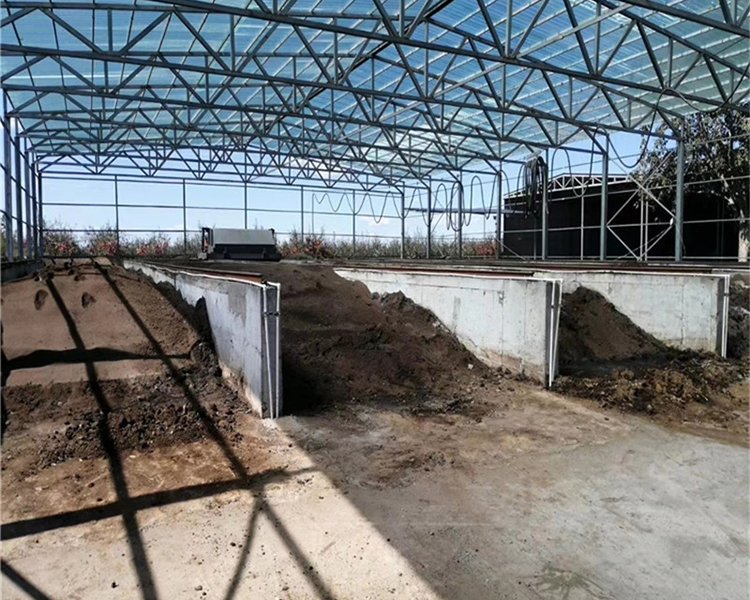
2. Composting and Fermentation
Fresh manure and other organic waste usually need to be composted before crushing and granulation. Composting reduces unpleasant odors, lowers the moisture content, and stabilizes the organic material.
Common composting equipment includes:
Windrow compost turner
Crawler-type compost turner
Groove-type compost turner
Fermentation tank or composting system
Ventilation and odor-control equipment
During fermentation, temperature, moisture, oxygen supply, and turning frequency should be managed according to the raw material. Poorly composted material can cause odor, unstable granulation, and inconsistent fertilizer quality.
3. Crushing
After composting, the material is crushed into smaller and more uniform particles. Crushing improves mixing, granulation, screening, and final product quality.
A semi-wet material crusher is often suitable for compost and manure that still contain some moisture. The best crusher depends on the material’s moisture, fiber content, hardness, and required particle size.
4. Mixing
The crushed organic material may be mixed with other organic materials, mineral nutrients, additives, or moisture regulators. A mixer helps distribute the ingredients evenly before granulation.
Common mixing machines include:
Horizontal mixer
Double-shaft mixer
Disc mixer
Ribbon mixer
Pan mixer
Uniform mixing is especially important when the final product must meet a specific nutrient formula.
5. Granulation
Granulation changes the loose fertilizer powder into particles that are easier to store, transport, spread, and sell. The suitable granulator depends on the fertilizer formula, moisture level, required particle shape, and production capacity.
Flat-die or roller-type granulator for selected materials
A disc granulator can produce relatively uniform round particles and is often used for small and medium-scale projects. A rotary drum granulator is suitable for larger continuous production lines. A stirring tooth granulator can be used for certain organic materials with suitable moisture and formulation conditions.
6. Drying and Cooling
Fresh granules may contain too much moisture for storage and packaging. A drying system reduces moisture to the required level, while a cooling machine lowers the product temperature before screening and packing.
Typical equipment includes:
Rotary drum dryer
Hot-blast furnace
Rotary cooler
Dust collection system
Air ducts and fans
Drying temperature and residence time should be controlled carefully. Excessive heat may damage nutrients or affect the appearance and strength of the granules.
7. Screening
The screening machine separates finished-size granules from oversized particles, undersized material, and dust.
A rotary drum screening machine is commonly used in fertilizer plants. The oversized particles can be returned to the crusher, while the undersized material can be recycled into the granulation process.
Effective screening improves:
Product size consistency
Packaging quality
Granule appearance
Production stability
Material recovery
8. Coating
A coating machine can apply oil, anti-caking agents, color, or other liquid additives to the fertilizer surface. Coating is optional and depends on the product formula and market requirements.
Coating may help improve product appearance, reduce dust, and limit caking during storage.
9. Packaging and Storage
The final fertilizer is weighed and packed into bags of the required size. Automatic or semi-automatic packaging machines can be selected according to production capacity and labor availability.
The packaging section may include:
Automatic weighing and bagging machine
Heat sealer or sewing machine
Belt conveyor
Checkweigher
Palletizing equipment
Finished-product warehouse
Finished fertilizer should be stored in a dry, ventilated area and protected from rain and excessive humidity.
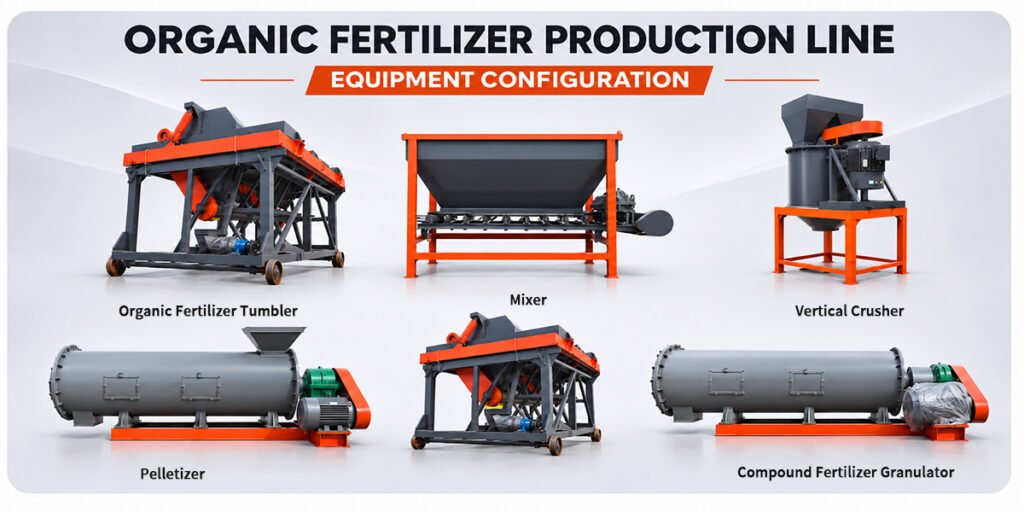
Main Equipment in an Organic Fertilizer Production Line
A complete line may contain the following equipment:
Production stage
Typical equipment
Feeding
Hopper, conveyor, shovel feeding bin
Composting
Compost turner, fermentation system
Crushing
Semi-wet crusher, vertical crusher, chain crusher
Mixing
Horizontal mixer, double-shaft mixer
Granulation
Disc granulator, rotary drum granulator
Drying
Rotary drum dryer, hot-blast furnace
Cooling
Rotary cooler, cooling fan
Screening
Rotary drum screening machine
Coating
Fertilizer coating machine
Packaging
Automatic or semi-automatic packing machine
Dust control
Cyclone, bag filter, ducting system
Automation
Electrical control cabinet and monitoring system
Not every project requires every machine. For example, a powder fertilizer line may not need a granulator, dryer, cooler, or coating machine. A composting project may also require a different front-end design from a poultry manure pelletizing project.
How Much Does an Organic Fertilizer Production Line Cost?
There is no single price for an organic fertilizer production line. Two projects with the same name can have very different costs because of differences in capacity, raw material, process design, automation, and construction conditions.
The main cost factors include:
Production Capacity
A line designed for a small farm requires fewer machines and a lower material-handling capacity than a commercial factory. Larger capacity also increases the size of conveyors, dryers, dust collectors, electrical systems, and storage areas.
Raw Material and Moisture
Wet manure may require composting, dewatering, drying, and stronger crushing equipment. Relatively dry compost may need a simpler process. Sticky, fibrous, or abrasive materials can also increase equipment and maintenance requirements.
Fertilizer Type
Powder fertilizer generally requires fewer machines than granulated fertilizer. Granulated products may require mixing, granulation, drying, cooling, screening, coating, and packaging.
Automation Level
Manual and semi-automatic lines usually require lower initial investment but more labor. Fully automatic lines require higher investment in sensors, electrical controls, conveyors, weighing systems, and monitoring equipment.
Plant Construction and Utilities
The total project budget may also include:
Workshop construction
Concrete foundations
Electrical installation
Water supply and drainage
Ventilation
Dust collection
Odor-control systems
Storage buildings
Installation and commissioning
Operator training
Spare parts
For this reason, equipment price should be evaluated together with the complete project scope. A lower machine price may not represent a lower total project cost if installation, dust control, electrical work, or shipping is excluded.
How to Reduce the Investment
A practical way to control costs is to design the line around the actual production target instead of purchasing unnecessary equipment.
You can reduce the initial investment by:
Selecting a capacity that matches current raw material availability.
Using a semi-automatic system before upgrading to full automation.
Reusing suitable existing buildings and storage areas.
Testing the raw material before choosing the crusher and granulator.
Comparing the complete process flow instead of comparing one machine price.
Planning future expansion when arranging the workshop and utilities.
Requesting a detailed list of included equipment, spare parts, installation, and after-sales service.
How to Choose the Right Organic Fertilizer Production Line
Before requesting a quotation, prepare the following information:
Type of raw material
Daily or hourly raw material volume
Raw material moisture content
Desired fertilizer output
Target production capacity
Powder or granule product
Required granule size
Bag weight and packaging method
Available workshop size
Local electricity and fuel conditions
Target market and fertilizer standards
A manufacturer can use this information to recommend the process flow, equipment models, workshop layout, and estimated investment more accurately.
Frequently Asked Questions
Can fresh manure be directly granulated?
Usually, fresh manure should be composted or treated before granulation. Excessive moisture, unstable organic matter, and high fiber content can reduce granulation performance and cause storage problems.
Is a dryer always necessary?
No. A dryer is not always required. Its necessity depends on the moisture content after composting and granulation, the required final moisture level, and local drying conditions.
What is the best granulator for organic fertilizer?
There is no universal best granulator. A disc granulator, rotary drum granulator, stirring tooth granulator, or other machine may be suitable depending on the material, formulation, capacity, moisture, and required particle shape.
Can the production line be customized?
Yes. Organic fertilizer production lines are normally customized according to raw material, capacity, product type, workshop layout, automation requirements, and budget.
How can I obtain an accurate quotation?
Send the manufacturer your raw material type, moisture content, expected capacity, desired fertilizer form, granule size, packaging requirement, and plant location. A complete quotation should explain the process flow, equipment list, technical parameters, installation scope, and delivery terms.
Conclusion
An organic fertilizer production line is a process system rather than a single machine. The most reliable design starts with raw material testing and then connects composting, crushing, mixing, granulation, drying, screening, and packaging according to the required product.
The total cost depends on capacity, raw material, moisture, fertilizer type, automation, plant construction, utilities, and installation. Choosing equipment based only on the lowest individual machine price can lead to higher operating and maintenance costs later.
Send us your raw material type, expected capacity, fertilizer product, and workshop information to receive a recommended process flow and project quotation.
With the development of cow breeding industry, cattle littter dispoal has been a difficulty for farm owners. There are two methods are commonly used by them for cow waste management. In recent years, through the construction of biogas di...
The main reasons for using organic fertilizer powder production lines can be attributed to the following points: The organic fertilizer powder production line can quickly convert organic waste into fertilizer. Through advanced production processes...
Due to their easy operation, simple design, and minimal training and maintenance requirements, mini poultry feed pellet production plants are an ideal choice for those who lack the resources or expertise to manage large-scale production facilities...
You have piles of valuable organic compost. But it is in a raw, bulky form. You want to turn it into a high-value, easy-to-use product. The key is to granulate organic fertilizer. This process transforms your compost into uniform, dense pellets. A...
 Organic fertilizer equipment,organic fertilizer production line,organic fertilizer equipment factory