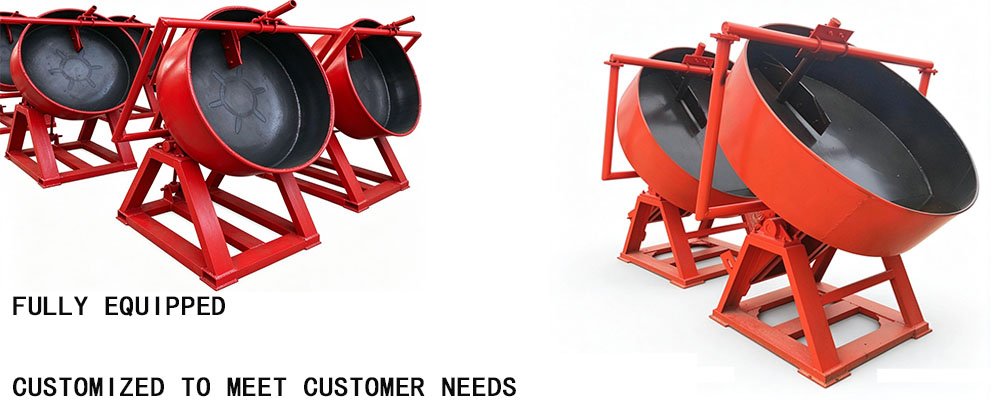
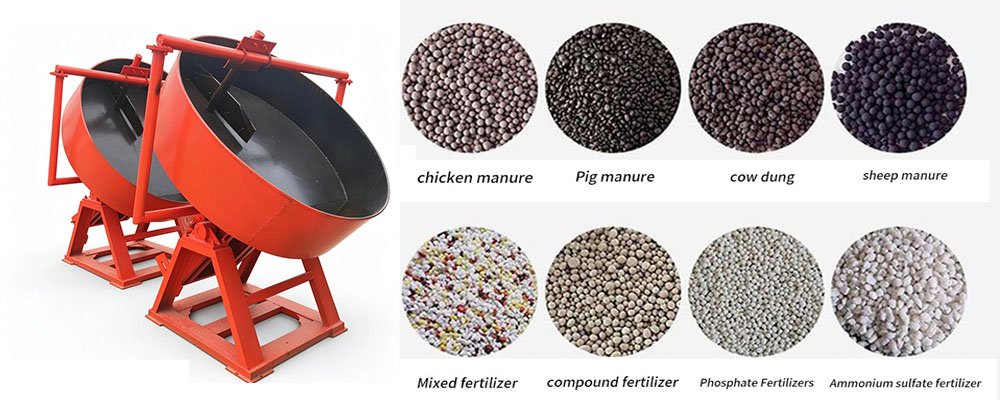
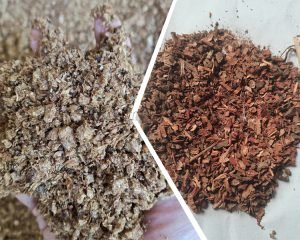
A disc granulator machine forms loose fertilizer powder or prepared organic material into relatively uniform granules. It is widely used in organic fertilizer production lines because it can produce rounded particles and can be adjusted for different materials and product requirements.
The quality and output of a disc granulator depend on material moisture, particle size, formula, feeding stability, disc speed, disc inclination, and operator control. For this reason, the granulator should be selected as part of a complete production process rather than as an isolated machine.
A disc granulator is a fertilizer granulation machine with a rotating inclined disc. Prepared material is fed onto the disc, where rotation causes the particles to roll, mix, and gradually form larger granules.
Liquid or moisture may be added during the process to help fine particles adhere. The formed granules are discharged from the edge of the disc and then sent to drying, cooling, screening, or packaging equipment.
A disc granulator can be used for:
Organic fertilizer
Compost-based fertilizer
Compound fertilizer
Mineral-organic fertilizer mixtures
Powdered fertilizer materials
Selected industrial granulation applications
The actual application depends on the material properties and required product quality.
How Does a Disc Granulator Work?
The working process can be divided into several stages.
1. Feeding
Prepared fertilizer powder or composted organic material enters the rotating disc through a feeding system. Stable feeding is important because sudden changes in feed rate can cause uneven granule size.
2. Wetting and Nucleation
A controlled amount of water or liquid binder may be added to the material. Fine particles begin to attach to small nuclei and form small wet balls.
The amount and position of liquid addition depend on:
Material moisture
Particle size
Formula
Binder type
Disc speed
Desired granule size
Excessive liquid can make particles sticky, while insufficient moisture may produce weak granules and excessive powder.
3. Rolling and Growth
As the disc rotates, the material rolls along the inclined surface. Small granules collect additional fine particles and gradually increase in size.
The rolling process helps produce rounded particles, but the final shape depends on material preparation and operating conditions.
4. Discharge
When the granules reach the required size or move toward the edge of the disc, they leave the machine and enter the next production stage.
Fresh granules may still contain moisture and should normally be dried and cooled before screening and packaging.
Main Parts of a Disc Granulator
A typical disc granulator includes:
Granulation disc
Main frame
Drive motor
Reducer
Transmission system
Scraper or cleaning device
Spray or liquid-addition system
Feed inlet
Discharge outlet
Control system
The disc angle and operating speed may be adjusted according to the material and product requirements. The machine structure should also allow convenient cleaning and maintenance.
What Affects Disc Granulator Capacity?
The advertised capacity of a granulator is not the same for every material. Actual output may change because of the following factors.
Material Moisture
Moisture directly affects the ability of particles to form and grow. Material that is too dry may not form stable granules. Material that is too wet may stick to the disc or produce oversized lumps.
Particle Size
Fine and relatively uniform material usually provides a better feed for granulation. Large particles may create uneven products and reduce the amount of qualified granules.
Formula
Different organic and mineral ingredients have different binding properties. A formula with poor natural adhesion may need a suitable binder or additional process adjustment.
Feeding Stability
An unstable feed can cause changes in granule size, shape, and moisture. A feeding hopper or conveyor can help maintain a more consistent material flow.
Disc Speed
The rotation speed affects material movement, rolling time, and granule growth. The suitable setting depends on the machine design and material properties.
Disc Inclination
The disc angle influences residence time and discharge behavior. It should be adjusted together with feeding rate, moisture, and speed.
Operator Experience
Correct operation helps maintain stable conditions. Operators should monitor the feed, moisture, granule shape, discharge, and motor load during production.
Disc Granulator in Organic Fertilizer Production
A disc granulator is commonly installed after composting, crushing, and mixing.
A typical process may be:
Raw Material → Composting → Crushing → Mixing → Disc Granulation → Drying → Cooling → Screening → Packaging
The process may also include a solid-liquid separator, coating machine, dust collector, or additional conveyor system depending on the raw material and final product.
Before granulation, organic materials should normally be:
Properly composted or stabilized;
Crushed to a suitable particle size;
Mixed uniformly;
Adjusted to suitable moisture;
Free from stones, metal, plastic, and other impurities.
Poorly prepared material can cause blockages, weak granules, irregular size, or high powder content.
Suitable Raw Materials
A disc granulator may be used for selected materials such as:
Composted cow manure
Chicken manure compost
Pig manure compost
Sheep manure
Mushroom residue
Crop residue compost
Food waste compost
Organic fertilizer powder
Organic-mineral fertilizer mixtures
The machine should be tested when the material contains excessive moisture, high fiber, large particles, or poor binding characteristics.
Disc Granulator vs Rotary Drum Granulator
Feature
Disc granulator
Rotary drum granulator
Granulation method
Rolling on an inclined disc
Continuous rolling inside a rotating drum
Common application
Small and medium projects, rounded particles
Continuous and larger-scale production
Particle shape
Often rounded or ball-shaped
Depends on formula and process
Operation
Relatively visible and adjustable
Continuous process control
Space requirement
Usually compact
Requires a longer process layout
Supporting equipment
Mixer, dryer, screen and conveyors
Dryer, cooler, screen and conveyors
Best choice
Flexible production and round granules
Larger continuous production
Neither machine is suitable for every project. The correct choice depends on raw material, capacity, product shape, moisture, formula, and budget.
How to Improve Granulation Quality
Prepare the Material Properly
Crush and mix the material before feeding the disc. Uneven feed particles can produce irregular granules.
Control Moisture
Add liquid gradually and monitor the material during production. Moisture should be controlled according to the material and granulator behavior.
Maintain a Stable Feed
Avoid sudden increases or interruptions in feeding. Stable feeding improves the consistency of granule size.
Keep the Disc Clean
Material buildup on the disc can affect rolling behavior and discharge. Cleaning should be performed according to the operating schedule.
Use Screening Equipment
A screening machine separates qualified particles from oversized and undersized material. Oversized particles can be returned for crushing, while undersized material can be recycled into the granulation process.
Match the Dryer to the Granulator
Fresh granules often need drying and cooling. If the dryer is too small, it can restrict the output of the whole line.
Common Disc Granulator Problems
Problem
Possible cause
Recommended action
Excessive powder
Material too dry or poor nucleation
Adjust moisture and improve feed preparation
Granules stick to the disc
Excessive moisture or liquid addition
Reduce liquid and check material condition
Granules are too large
Excessive residence time or moisture
Adjust disc angle, speed, or feed rate
Uneven granule size
Unstable feeding or poor mixing
Stabilize feeding and improve mixing
Granules are weak
Poor formula or insufficient binding
Test the formula and adjust moisture
Disc surface buildup
Sticky material or excessive moisture
Clean the disc and improve process control
Low output
Improper feeding or unsuitable material
Check capacity, moisture, and machine selection
High motor load
Overfeeding or large foreign objects
Reduce feed rate and inspect the material
How to Choose a Disc Granulator Machine
Before requesting a quotation, prepare:
Raw material type
Moisture content
Fiber content
Required capacity
Desired granule diameter
Fertilizer formula
Expected operating hours
Available workshop area
Drying and cooling requirements
Packaging method
Local electricity conditions
A manufacturer may also request a material sample or production video. This information helps determine the machine size, supporting equipment, liquid-addition method, and complete process flow.
Frequently Asked Questions
What is a disc granulator used for?
A disc granulator is used to form prepared fertilizer powder or organic material into relatively uniform granules.
Is a disc granulator suitable for organic fertilizer?
Yes. It can be used for selected composted manure, organic fertilizer powder, and organic-mineral mixtures when the material has suitable moisture and particle size.
Can a disc granulator produce different granule sizes?
The final particle size can be influenced by moisture, feed rate, disc speed, disc angle, residence time, and screening. The adjustment range depends on the machine model and material.
Does a disc granulator need a dryer?
Many wet granulation processes require drying and cooling after granulation. Whether a dryer is necessary depends on the initial moisture and final product requirements.
Is a disc granulator better than a rotary drum granulator?
Neither machine is universally better. A disc granulator may be suitable for flexible production and rounded particles, while a rotary drum granulator may be preferred for larger continuous production.
How can I get the correct disc granulator recommendation?
Send the manufacturer your raw material type, moisture, required capacity, target granule size, fertilizer formula, and workshop information. A customized process recommendation is more reliable than selecting a machine by name alone.
Conclusion
A disc granulator machine forms prepared fertilizer material into rounded granules through controlled feeding, wetting, rolling, and particle growth. Its performance depends on the complete process, including composting, crushing, mixing, moisture control, drying, cooling, and screening.
The correct machine should be selected according to the raw material, capacity, granule size, formula, and production conditions. A complete equipment plan can improve granule quality, reduce operating problems, and support more stable fertilizer production.
Struggling with urea dust or inconsistent granules? Need a reliable way to turn urea into easy-to-handle fertilizer pellets? We can help you find the solution. Solving urea granulation involves choosing the right process, like extrusion, disc, or ...
The trough type flipping machine is an efficient agricultural machinery equipment specifically designed for the fermentation treatment of organic materials. Including fermentation and moisture removal operations in organic fertilizer plants, compo...
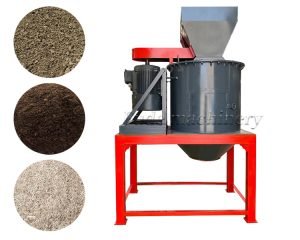
The working principle of the organic fertilizer vertical crusher is mainly based on the multiple impacts, squeezing, and crushing processes of the material inside the casing. Specifically, its working principle can be summarized as follows: In add...
If you are trying to turn waste like used mushroom substrate or herbal medicine dregs into fertilizer, you may have found it is not easy. These materials are valuable, but they are also very hard to granulate. They are light, fibrous, and not stic...
 Organic fertilizer equipment,organic fertilizer production line,organic fertilizer equipment factory