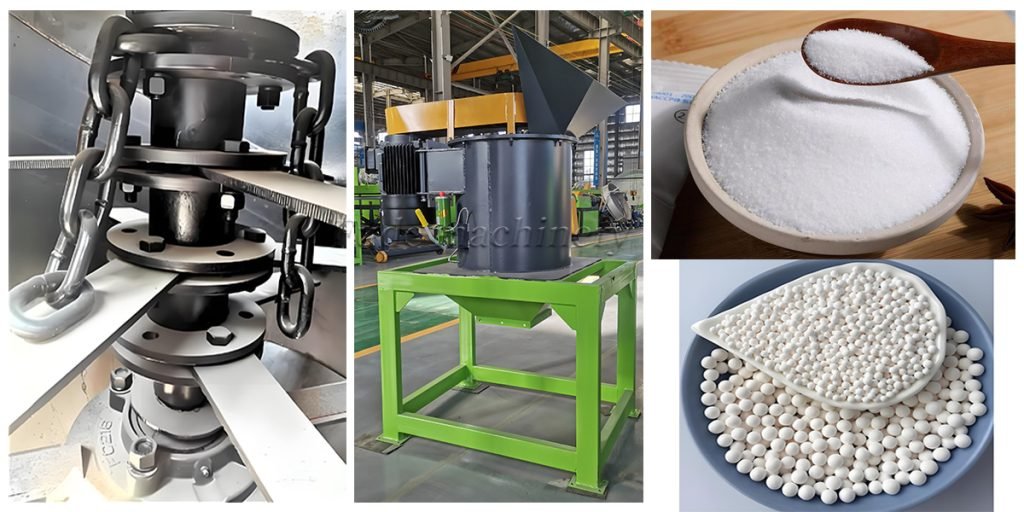
We are an organic fertilizer equipment manufacturer. Our Vertical Crusher (Chain Crusher) is specially designed for wet, tough and fibrous raw materials such as straw compost and plant waste. Unlike ordinary crushers that easily clog, it delivers stable and efficient crushing for hard-to-process organic materials.
Why Do Fibrous and Wet Materials Clog Other Crushers?
Most standard crushers fail with fibrous materials because their design allows for tangling. Imagine a typical crusher with a horizontal rotor and fixed hammers. When you feed it something stringy, like straw or palm fibers, those fibers do not shatter. Instead, they wrap themselves around the rotor and the hammers. This quickly creates a dense, tangled mass that builds up, blocks the discharge, and brings the entire machine to a halt. This forces costly downtime for a difficult and time-consuming cleanout.
The problem gets worse when the material is also wet. The moisture acts like a glue, making the tangled fibers even more compact and sticky. This combination of fiber and moisture will instantly clog any crusher that relies on a bottom screen to control particle size. The screen becomes plastered with a layer of wet material, and nothing can get through. This is not a problem you can solve with more power; it is a fundamental design flaw for this type of material. You need a different kind of crushing action.
How Does the Vertical Chain System Actually Work?
A Vertical Crusher overcomes the tangling problem by using a completely different mechanism: a vertical rotor with high-speed chains. This design does not just hit the material; it violently shreds and shatters it in mid-air, making it physically impossible for fibers to wrap and tangle. It is a simple but incredibly effective solution.
Here is how we engineer our Vertical Crushers at Fude Machinery:
Vertical Orientation: The machine stands upright. Material is fed into the top and is processed as it falls through the crushing chamber by gravity.
High-Speed Chain Rotor: The central rotor is fitted with multiple layers of hardened, wear-resistant alloy steel chains. When the machine is running, the rotor spins at a very high speed, and centrifugal force throws these chains outward. They become a curtain of destruction.
Violent Shredding Action: As material enters the chamber, it is struck repeatedly by the spinning chains. It is hit from all angles, torn, shredded, and smashed against the hardened inner walls of the machine. This action pulverizes everything, including tough fibers.
Screenless Design: This is a crucial feature. There is no screen at the bottom to clog. The fine, crushed material falls straight through the open discharge. This guarantees continuous, uninterrupted operation.
Which Materials Absolutely Require a Vertical Crusher?
You should choose a Vertical Crusher if your raw material is both wet and contains a significant amount of tough, stringy fiber. This machine is a specialist. While other machines can handle moisture, theVertical Crusher is the champion for materials that combine wetness with structural toughness.
This machine is the best choice for processing:
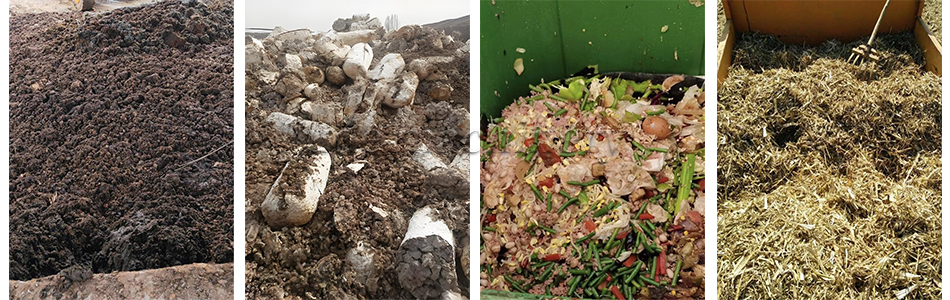
Compost with High Straw Content: Very common in waste from cattle farms, horse stables, and some poultry operations. The straw is a constant source of tangling for other crushers.
Spent Mushroom Substrate: This material is a mix of compost, straw, and wood chips, which makes it both lumpy and fibrous.
Palm Oil Waste: Empty fruit bunches (EFB) and palm fronds are famously strong and fibrous, requiring a powerful shredding action.
Sugarcane Bagasse and Biogas Residue: These plant-based residues are often wet and contain long, tough fibers.
Municipal Green Waste: Certain types of yard waste with vines, branches, or palm fronds are processed more effectively with this machine.
If you work with any of these materials, a Vertical Crusher is not just an option; it is a necessary investment for a smooth operation.
Vertical Crusher vs. Semi-Wet Crusher: Which Do You Need?
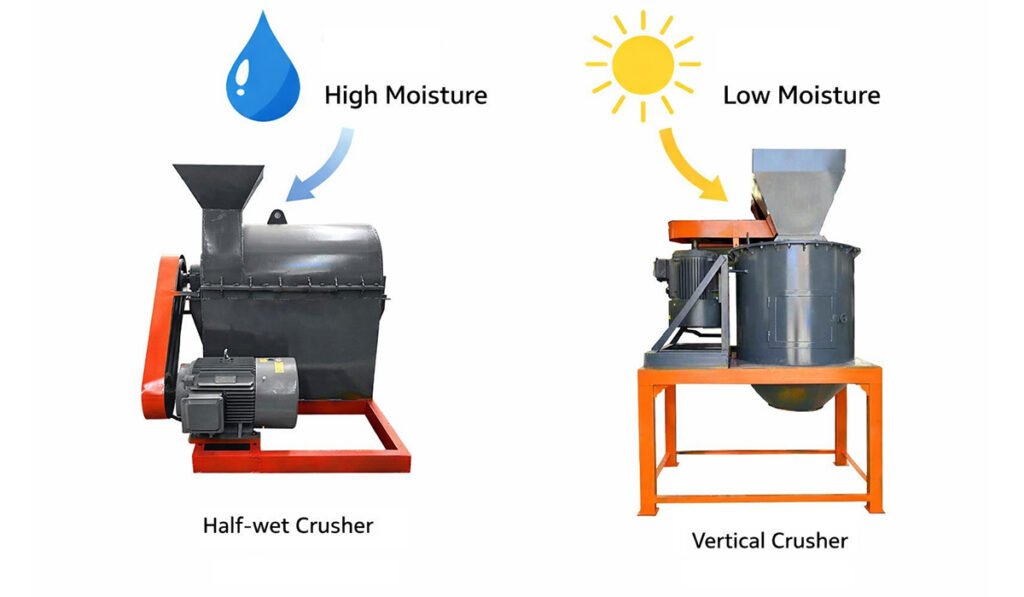
This is a question we get all the time from customers. As a manufacturer of both machines, we can give you a clear answer. Both are excellent, screenless crushers for high-moisture materials. The choice depends entirely on one thing: fiber.
Feature
Vertical Crusher
Semi-Wet Material Crusher
What This Means For You
Crushing Tool
High-Speed Chains
Opposing Hammer Rotors
Chains are for shredding fibers. Hammers are for shattering sticky lumps.
Best Material
Fibrous AND Wet (e.g., Straw Compost)
Sticky AND Wet (e.g., Pure Manure, Sludge)
Match the tool to the job. Using a hammer crusher on high-fiber material leads to tangling.
Material Flow
Top-to-Bottom (Vertical)
Side-to-Side (Horizontal)
The vertical design uses gravity to help feed tough material through the crushing zone.
Primary Role
The Fiber Specialist
The Moisture Specialist
Both are great machines. The Vertical Fertilizer Crusher is the one you need when your compost is full of straw.
Understanding this key difference will help you select the perfect fertilizer crusher for your raw material. A semi-wet material crusher is an excellent machine, but it is not the right tool for fibrous waste.
Frequently Asked Questions
Question 1: What is the main advantage of a Vertical Crusher? Its main advantage is its unique ability to crush tough, fibrous, and wet materials without clogging. The high-speed chain system shreds materials that would tangle and stop a traditional hammer crusher, making it essential for things like straw-heavy compost or palm waste.
Question 2: Does a Vertical Crusher have a screen? No, it is a screenless design. This is a critical feature that makes it clog-proof. Material is pulverized by the chains and falls straight out the bottom, ensuring continuous operation even with very wet and sticky compost.
Question 3: What is the difference between a Vertical Crusher and a Semi-Wet Crusher? Both handle wet materials well. The difference is fiber. A Semi-Wet Crusher uses hammers and is perfect for sticky materials like pure manure or sludge. A Vertical Crusher uses chains and is superior for materials that are both wet AND fibrous, like compost mixed with a lot of straw or wood chips.
Question 4: How do I maintain a Vertical Fertilizer Crusher? Maintenance is straightforward. The primary wear parts are the hardened steel chains and the inner lining plates. You will need to inspect these regularly for wear and replace them as needed to maintain performance. We design our machines for easy access to make this process simple.
Summary and Recommendations
The Vertical Crusher is a problem-solving machine. It is the definitive solution for organic fertilizer producers who are dealing with the dual challenge of high moisture and high fiber content in their raw materials. Its powerful, screenless chain-flail system provides reliable, clog-free performance where other crushers fail. This makes it an essential piece of organic fertilizer equipment for any serious composting operation that processes agricultural waste.
If you are tired of production stopping because of tangled, clogged machinery, it is time to invest in the right tool. At Fude Machinery, we build our Vertical Crushers to be robust, efficient, and easy to maintain. As a factory-direct manufacturer, we can provide a customized machine that perfectly fits your needs and helps you achieve continuous, profitable production.
Are you struggling to crush tough, fibrous organic waste? Contact our expert team today for a free consultation and a direct quote on a Vertical Fertilizer Crusher built to handle it.
The process of producing cow manure as a water-soluble fertilizer is an environmentally friendly process that converts organic waste into a highly efficient agricultural resource. The process involves multiple steps, including collection, pretreat...
Bentonite granules, often used in organic fertilizers, improve soil structure, increase water retention, and promote overall plant health. When processing bentonite rocks, a Bentonite Granules Making Machine is essential. In this article, we explo...
You are managing a large farm or fertilizer facility. You have mountains of organic waste like animal manure, straw, or sewage sludge spread out in long piles, called windrows. Turning these piles with a front-end loader is slow, burns a lot of fu...
In today’s agricultural industry, sustainability and efficiency are paramount. Among the many innovative solutions developed to meet these needs, the powdered carbon-based fertilizer production line stands out. This advanced system not only enhanc...
 Organic fertilizer equipment,organic fertilizer production line,organic fertilizer equipment factory