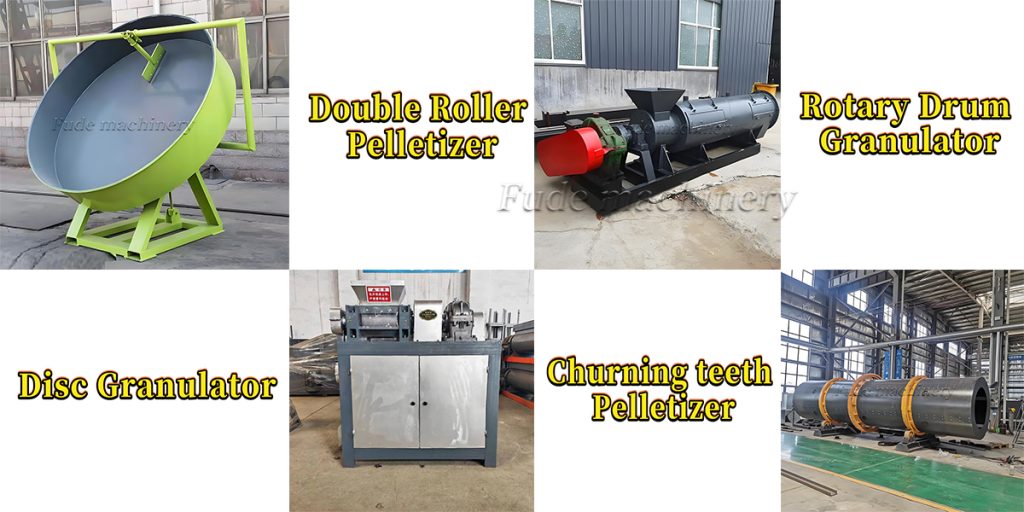
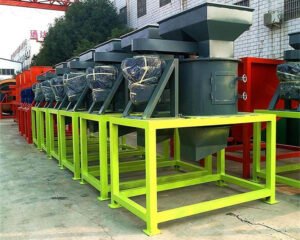
I know that choosing the right granulator for your business is a difficult decision. It involves significant capital and impacts your long-term operational efficiency. If your material is a dry powder, like certain chemical compounds, minerals, or even fully dried compost, then traditional wet granulation methods are not the answer.
They add unnecessary complexity and cost. I am here to tell you about the power of the Double Roller Granulator. This machine uses immense pressure to transform fine powders into dense, high-strength granules. We at Fude Machinery have perfected this technology.
How Does High-Pressure Compaction Work to Form Granules?
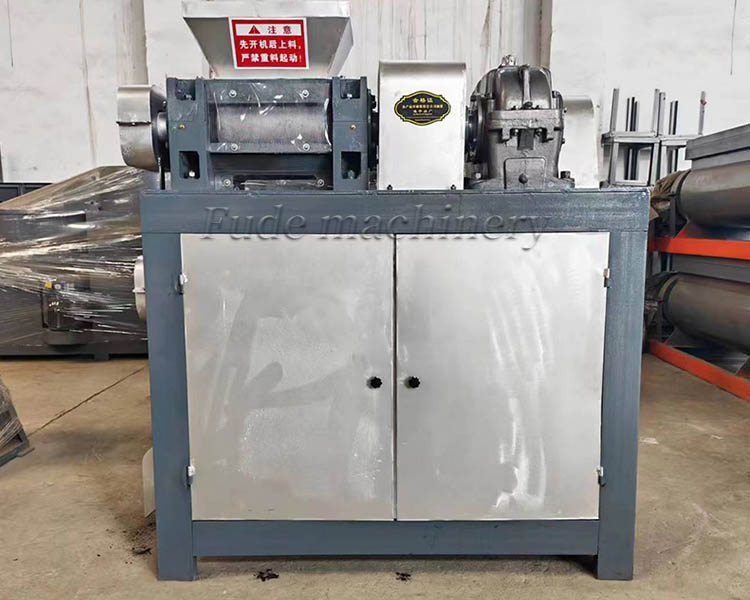
The Double Roller Granulator works by using two counter-rotating rollers to compress dry powder into solid sheets. This process is called extrusion. It is a completely dry method that relies entirely on pressure to form the granule bonds.
This process is fundamentally different from the wet methods we use for sticky organic compost. In wet granulation, you add a liquid binder and rely on surface tension to form pellets. Here, we use pure mechanical force.
The fine powder material is fed continuously into the gap between two large, robust rollers. These rollers rotate toward each other. They have powerful hydraulic systems that push them together with immense force. As the material passes through this gap, the pressure forces the fine particles to compact.
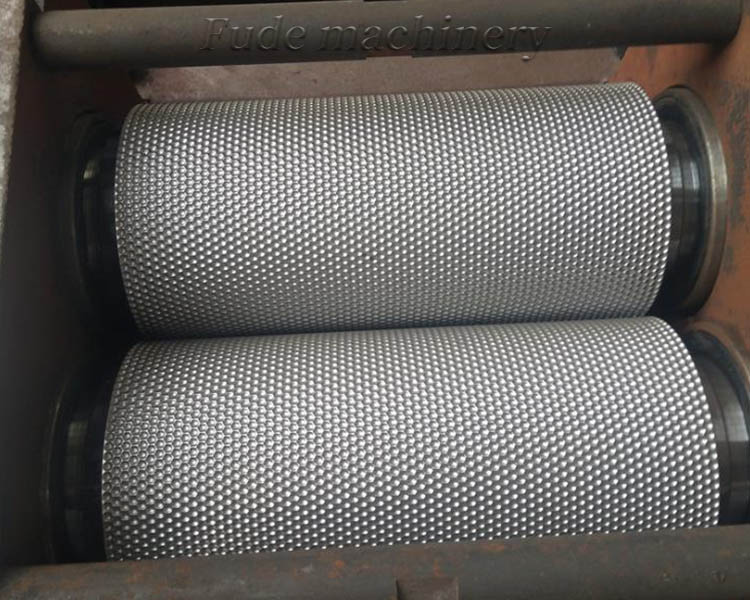
The material does not form pellets immediately. Instead, it is compressed into a solid, high-density sheet or “flake.” The surface of the rollers contains specific molds or pockets. These pockets dictate the final shape of the granule. These pocket shapes are typically pillow, oval, or strip.
The machine exerts tremendous pressure. This pressure forces the powder particles to chemically and physically bond together. Because there is no water involved in this bonding, the final product is already dry. This eliminates the need for a separate drying machine. This single feature makes the Double Roller Granulator one of the most cost-effective granulation methods available for dry powder.
Why Is This Machine Best Suited for Dry Powder Materials?
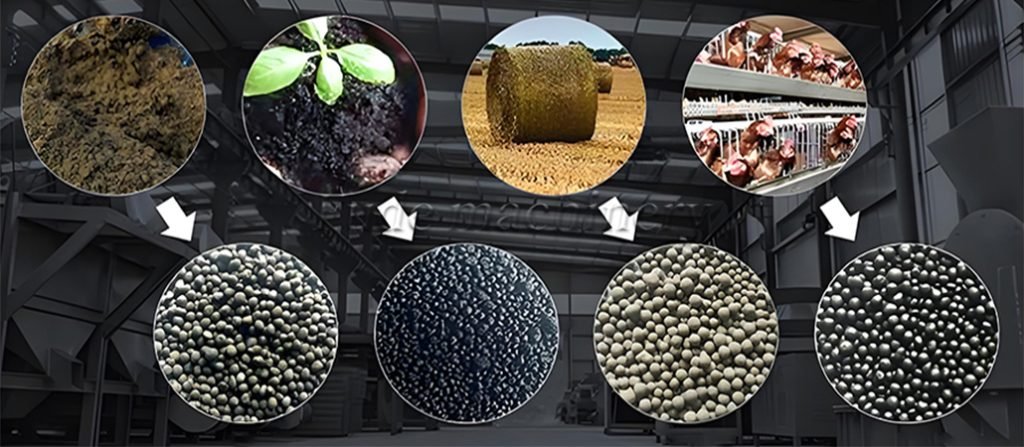
The Double Roller Granulator is engineered specifically for materials with low moisture content, typically under 10%. This dry method excels at processing mineral fertilizers, certain chemical powders, and compounds that react poorly to water.
Many compound fertilizers, such as NPK blends, are often granulated using this dry process. NPK ingredients are mixed together and then immediately fed into the roller granulator. The high pressure ensures a consistent blend within the final granule. This is important for precise nutrient delivery to the soil.
We also see tremendous success with mineral powders. Materials like potassium sulfate, ammonium chloride, and many industrial chemical raw materials require this high-pressure compaction. These materials must be dry for stability and to maintain their chemical structure.
When you use a wet granulator on dry chemicals, you introduce the complexity of drying and cooling. This adds two massive, expensive machines to your line. Furthermore, adding water risks dissolving the fine particles. It also risks causing unwanted chemical reactions. The Double Roller Granulator solves all these problems. It bypasses the liquid phase entirely.
The process moves directly from mixing to granulation. This simplicity also makes the control process much easier. You do not have to worry about maintaining the precise moisture content required by wet granulation. You only need to ensure your powder feed is uniform and dry. This makes the fertilizer production line simpler, more stable, and easier to operate.
Material Type
Moisture Requirement
Granulation Method Used
Composted Manure
25% – 35%
New Type Organic Granulator (Wet)
NPK/Mineral Blends
< 10%
Double Roller Granulator (Dry)
Industrial Chemicals
< 5%
Double Roller Granulator (Dry)
Integrating the Double Roller Granulator into Your System
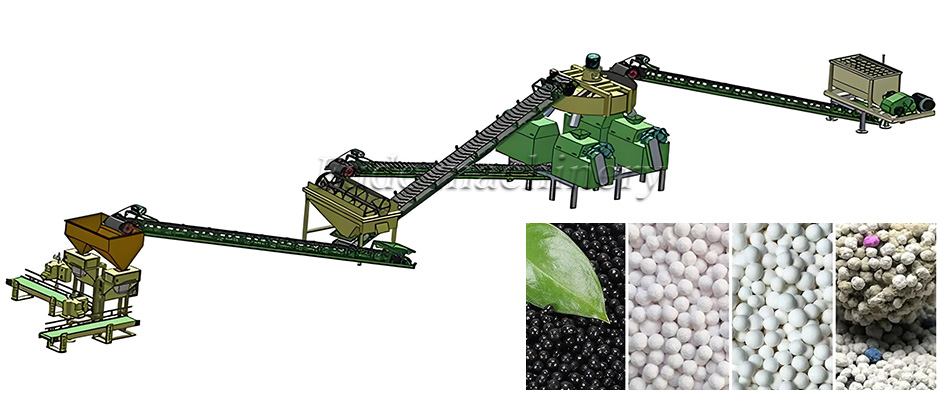
A successful dry granulation system requires careful integration of supporting equipment. After the roller forms the initial sheet, a flaker and a screening machine are essential for processing the material into the final, marketable granule.
The Double Roller Granulator is the heart of the system. However, the system is not complete without the necessary upstream and downstream machines. Upstream, you need a highly accurate feeding system. This ensures the dry powder is delivered to the rollers at a uniform, consistent rate. Fluctuations in feed rate can reduce the pressure and lead to weaker sheets. You also need a powerful mixer to blend all the dry components, especially if you are making NPK or compound fertilizers.
Downstream processing is where the final product is shaped. When the material exits the rollers, it is still in a sheet or large piece. This sheet must be broken down. We use a flaker, or secondary crusher, to gently break these high-density sheets into individual granules. Then, the resulting mixture of granules goes into a rotary screening machine. This machine separates the product into three streams:
Finished Product: The perfectly sized granules (typically 2mm-4mm) are sent to the final cooler and packaging line.
Oversized: Pieces too large are sent back to the flaker for a second crushing.
Undersized/Dust: Fine powder is immediately recycled back to the beginning, where it is fed back into the Double Roller Granulator.
This closed-loop system ensures maximum yield and minimal waste. It is a highly efficient way to transform a fine powder into a durable, marketable compound fertilizer.
2026 Latest Developments in Roller Granulation Technology
The biggest development in 2026 focuses on improving roller materials and incorporating smart automation. These advancements are designed to increase uptime and extend the service life of the most critical wear parts.
One common concern about the Double Roller Granulator is the life of the rollers themselves. They are subject to extreme pressure and abrasion. The latest Fude Machinery models feature rollers made from a new generation of wear-resistant alloy steel. This material can extend the roller’s service life by up to 25%. This means fewer costly replacements and less downtime for maintenance.
Frequent Questions About Roller Granulators
Question 1: Can this machine be used for wet compost or sludge? No. This machine is designed exclusively for dry powders (typically less than 10% moisture). Wet or sticky materials should use our New Type Organic Fertilizer Granulator which uses the stirring tooth method.
Question 2: How often do the rollers need to be replaced? Roller replacement frequency depends entirely on the hardness and abrasiveness of your material. For typical NPK salts, rollers can last 6 to 12 months, sometimes longer. Our new alloy rollers are designed for maximum lifespan.
Question 3: Does the pressure compaction process require any binder? For most compound fertilizers, mineral powders, or dry organic material, no binder is required. The extreme mechanical pressure forces the particles to bind together naturally.
The Double Roller Granulator offers a powerful and energy-efficient solution for dry powder granulation. It is the ideal choice if you are dealing with mineral compounds, NPK blends, or any material where high density and the elimination of drying are priorities. We have shown that this dry compaction technology delivers significant financial benefits through lower operating costs and a higher-quality, stronger final product. We at Fude Machinery are experts in all forms of granulation. We can design the perfect system to meet your specific material needs.
Contact our engineering team today for a free consultation. We will help you assess your material and provide a detailed quotation for the perfect roller granulator system.
With the country’s further emphasis on environmental protection, livestock and poultry manure in the breeding industry is also one of the main sources of environmental pollution. But at the same time, if the livestock and poultry manure is proce...
Multi-functional feed pellet machine is mainly a animal feed processing machine with corn, rice husk, grass, soybean meal, straw and other crushed materials directly pressed into pellets. It is widely used in small, medium and large aqu...
Agricultural productivity forms the cornerstone of global food security and economic stability. To meet the ever-growing demands for high-quality crops, advancements in fertilizer technology become imperative. How can a 10 t/h NPK granulatio...
As a fertilizer producer, you know that the quality of your raw materials is never consistent. Whether you are dealing with composted manure, crop residues, or mineral powders, you will always face clumps, cakes, and oversized particles. This is ...
 Organic fertilizer equipment,organic fertilizer production line,organic fertilizer equipment factory