Cow manure, long regarded as a “waste product” in livestock farming, has emerged as a valuable resource in sustainable agriculture. Rich in nitrogen, phosphorus, potassium, and organic matter, it is an ideal raw material for organic fertilizers.
However, fresh cow manure has a high moisture content (typically 70%-85%), which leads to issues such as odor emission, nutrient loss, and difficulty in storage and transportation. The key to unlocking its value lies in efficient drying, and organic fertilizer dryers have become the core equipment to achieve this goal.
This article will detail how to use organic fertilizer dryers to quickly and effectively dry cow manure, helping farmers and organic fertilizer producers improve production efficiency and economic benefits.
Why Choose Organic Fertilizer Dryers for Cow Manure Drying?
Before delving into the specific operation methods, it is necessary to clarify the unique advantages of organic fertilizer dryers compared to traditional drying methods (such as natural air-drying and sun-drying) in cow manure processing. These advantages are the foundation of “quick drying”.
Controllable drying conditions, no weather restrictions: Natural drying relies heavily on sunlight and wind, and the drying cycle can be as long as 15-30 days, which is easily affected by rainy days and high humidity. Organic fertilizer dryers use closed heating and ventilation systems, and the temperature, humidity, and air flow inside the equipment can be precisely adjusted, ensuring stable drying efficiency regardless of external weather conditions.
High thermal efficiency, significant speed advantage: Advanced organic fertilizer dryers adopt multi-layer heat exchange structures and efficient heat sources . The heat utilization rate can reach more than 70%, which can quickly reduce the moisture content of cow manure from 80% to the standard 15%-20% within 1-3 hours, greatly shortening the production cycle.
Preserve nutrients and improve product quality: The drying temperature of organic fertilizer dryers can be controlled between 60℃-120℃. This temperature range can not only kill harmful bacteria, eggs, and weeds in cow manure but also avoid the volatilization of heat-sensitive nutrients. Compared with high-temperature burning in traditional methods, the organic fertilizer produced has higher nutrient retention rate and better fertilizer efficiency.
Reduce environmental pollution and realize resource utilization: The closed operation of the dryer can effectively collect the exhaust gas and odor generated during the drying process. After treatment by deodorization equipment, it can meet environmental protection standards. At the same time, the dried cow manure has no odor, is easy to granulate and package, and truly realizes the “turning waste into treasure” of livestock and poultry manure.
Key Steps for Quick Drying of Cow Manure with Organic Fertilizer Dryers
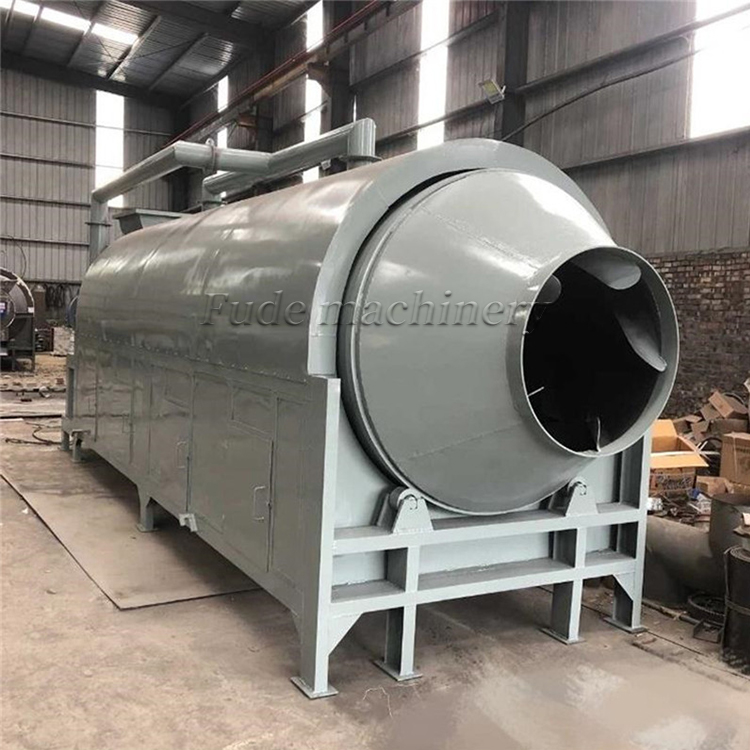
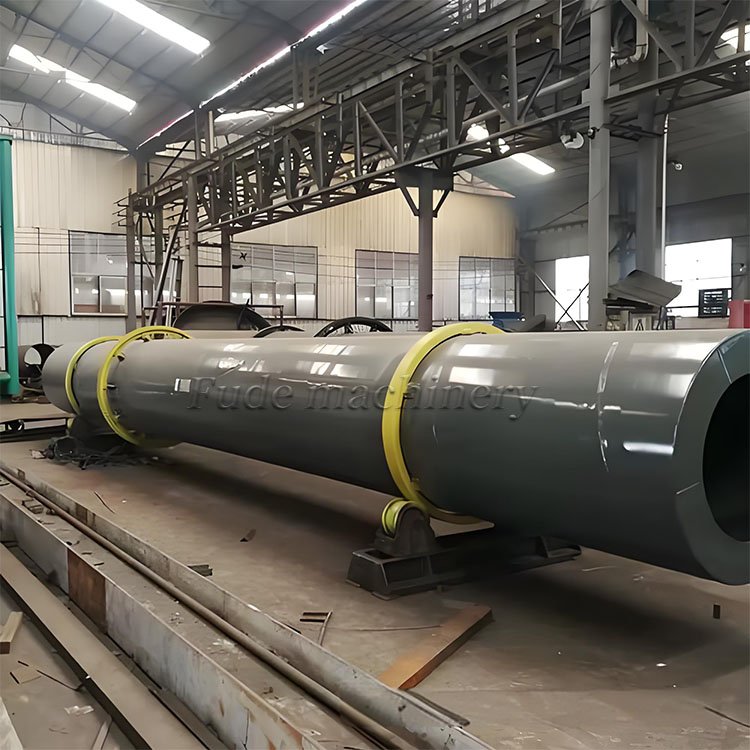
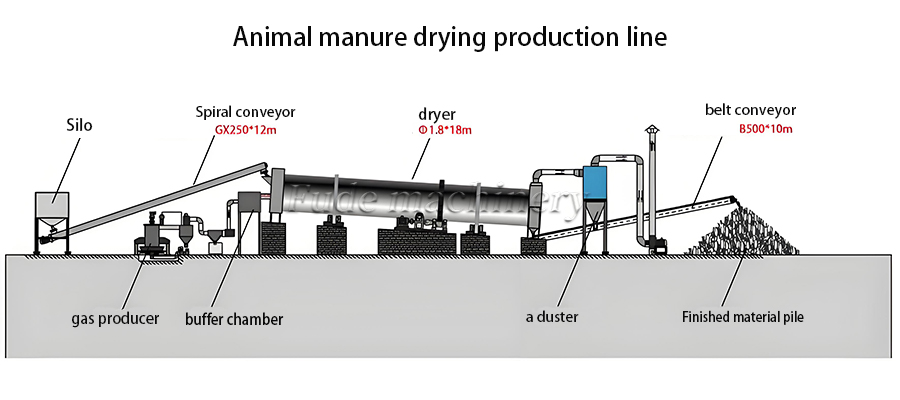
To achieve efficient and high-quality drying of cow manure, it is necessary to strictly follow the operating procedures and pay attention to the coordination of each link. The following takes the widely used rotary drum organic fertilizer dryer as an example to elaborate on the specific steps.
1.Raw Material Pre-treatment: The Basis for Rapid Drying
Fresh cow manure contains impurities (cow hair, straw, stones) and uneven moisture. Pre-treatment reduces dryer load and boosts efficiency.
Impurity removal: Use vibrating/drum screens for large impurities (stones, straw) and cyclone separators for cow hair to prevent duct clogging.
Moisture adjustment: Mix manure with >85% moisture and dried powder (3:1-4:1) to adjust to 70%-75%, avoiding drum sticking.
Crushing & homogenization: Crush agglomerates to <5mm particles via vertical crusher for uniform hot air contact.
2.Equipment Debugging: Ensure Stable Operation
Comprehensive pre-start debugging prevents operational shutdowns due to equipment failures.
Heat source check: Choose biomass (large farms) or natural gas (eco-requirements). Pre-set air temp: 100℃-120℃ (initial), 60℃-80℃ (final).
Dryer debugging: Ensure drum speed (3-5 r/min), good sealing, functional fans; adjust lifting plates for full material turning.
Feeding system: Stable speed for feeders; match 1-1.5 tons/hour (φ1.2×12m dryer) to avoid accumulation/waste.
3.Drying Operation: Precision Control for Efficiency
Precise control of temperature, airflow, and residence time is critical for core drying efficiency.
Temperature control: 3 zones – preheating (100℃-120℃), constant temp (70℃-90℃), cooling (<40℃); monitor via thermocouple.
Residence time: 1.5-2.5 hours; adjust speed/inclination (extend if >20% moisture, shorten if <15%).
4.Post-drying Treatment: Ensure Product Quality
Post-drying processes guarantee dried manure meets organic fertilizer production and sales standards.
Moisture detection: Test with moisture meter; adjust parameters if not 15%-20% (standard).
Cooling & screening: Cool to room temp, re-screen to remove fine powder/unqualified particles.
Packaging & storage: Use lined woven bags; store in dry, ventilated warehouses.
Practical Tips to Improve Drying Efficiency and Reduce Costs
In addition to following the standard operating procedures, the following practical tips can further improve the drying efficiency of cow manure and reduce production costs, which is of great significance for long-term production.
Reasonable selection of heat sources: Combine local resource conditions to select cost-effective heat sources. For example, farms with abundant crop straw can use biomass boilers; areas with sufficient sunlight can use solar-assisted heat pumps; for small-scale production, electric heating dryers can be selected, which are easy to operate and have low maintenance costs.
Recycle waste heat: Install a heat exchanger in the exhaust gas pipeline of the dryer to recover the heat in the exhaust gas and use it to preheat the fresh air entering the dryer. This can reduce the heat consumption of the heat source by 15%-20% and significantly reduce energy costs.
Implement continuous production: Organic fertilizer dryers have higher efficiency in continuous operation than intermittent operation. Arrange the feeding, drying, and discharging links in a continuous manner, and reasonably allocate the shift system to avoid equipment idleness, thereby improving the daily output of dried cow manure.
Regular maintenance of equipment: Clean the heat exchange surface of the dryer every 15-20 days to remove the material scale attached to it, ensuring efficient heat transfer; check the wear of the lifting plate and the sealing ring regularly, and replace the damaged parts in time to avoid reducing the drying efficiency due to equipment failure.
Conclusion
The quick drying of cow manure using organic fertilizer dryers is a systematic project that requires close cooperation from raw material pre-treatment, equipment debugging, process control, and post-drying treatment. By selecting suitable drying equipment, optimizing the operating parameters, and adopting cost-saving measures, farmers and organic fertilizer producers can not only efficiently convert cow manure into high-quality organic fertilizer but also reduce environmental pollution, realize the sustainable development of the livestock and poultry breeding industry and the agricultural industry, and finally achieve significant economic and social benefits.
With the increasing global attention to organic agriculture and environmental protection, the technology of using organic fertilizer dryers to process livestock and poultry manure will have broader application prospects. It is believed that with the continuous upgrading of equipment and the optimization of processes, the efficiency and quality of cow manure drying will be further improved, making greater contributions to the development of green agriculture.
Since its establishment in 2015, Fude Machinery has been committed to providing high-quality and high-performance wood equipment solutions to global customers. With advanced production technology, strict quality control, and continuous innovative research and development capabilities, we have received customer satisfaction praise.
The production equipment includes: fermentation rake, dryer, granulator, crusher, mixer, round throwing machine, organic fertilizer production line, etc. The company will continue to adhere to the business philosophy of “quality first, customer first” and provide higher quality organic fertilizer equipment solutions for global customers.
Producing high-quality biofertilizer is more than just mixing raw materials — granule strength, shape, and uniformity all influence application efficiency, transportation, and storage. Among many granulation technologies, the roller compacto...
Chicken manure is a highly valuable resource for creating biofertilizers, rich in nutrients essential for plant growth. Converting this waste into biofertilizer not only helps in sustainable farming but also reduces environmental impact. One eff...
The organic fertilizer turning machine, as a key equipment for organic waste treatment and organic fertilizer production, has multiple types, each with its specific application scenarios and working principles. The following are the main types an...
 Organic fertilizer equipment,organic fertilizer production line,organic fertilizer equipment factory