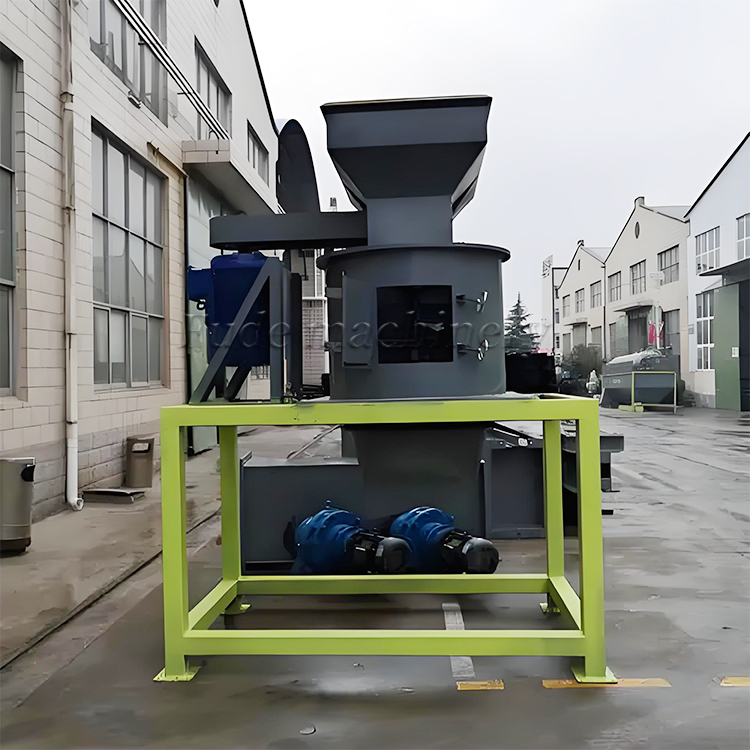
In any fertilizer plant, lumps are the enemy of efficiency. Whether it is clumps forming in your mixed raw materials or oversized granules returned from your screening machine, you need a reliable way to break them down. This is where the chain mill crusher becomes an essential workhorse. At Fude Machinery, we see this machine as the key to a smooth, uninterrupted production flow, especially for compound fertilizer producers. It is designed for one simple purpose: to efficiently crush lumpy, brittle materials with unmatched reliability.
What Makes a Chain Mill Crusher Different from Other Crushers?
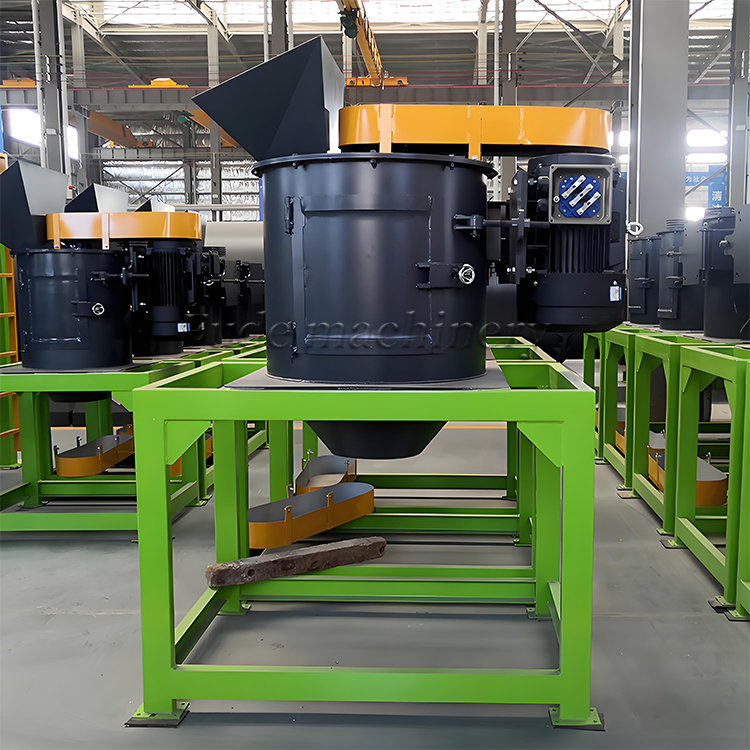
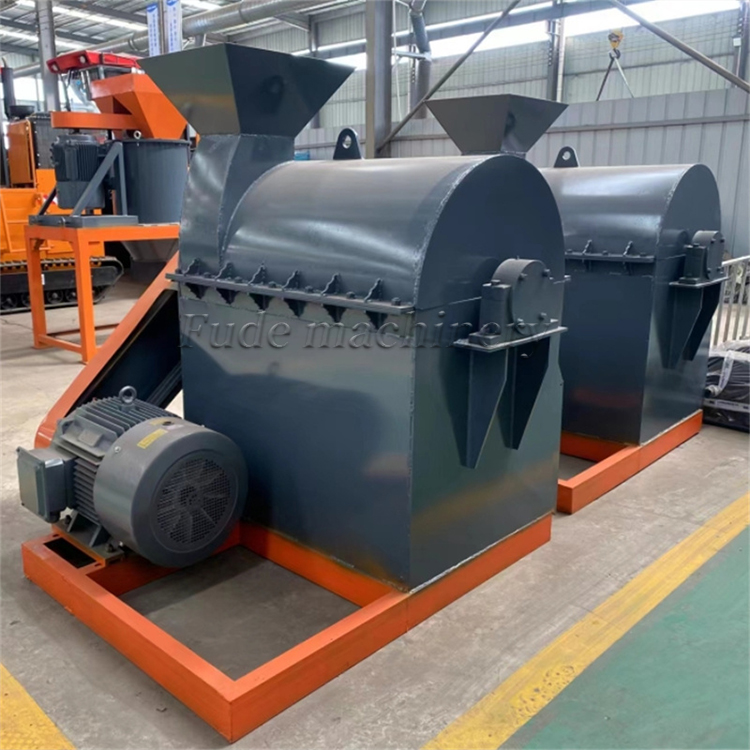
A chain mill crusher is different because it uses high-speed, hardened steel chains to smash materials, offering a unique advantage for certain types of fertilizer. Unlike a hammer crusher that uses solid metal blocks, or a wet material crusher with a screenless design, the chain mill occupies a special place. Inside the machine, one or two rotors are fitted with multiple strands of high-strength alloy chains. As the rotors spin at high speed, these chains extend outwards and act like a flurry of powerful blows, shattering any material that enters the chamber.
This chain-based mechanism is particularly effective against materials that are moderately moist or have a tendency to cake. The flexible, swinging action of the chains helps to prevent the kind of clogging and buildup that can sometimes plague rigid hammer systems. It is a simple, robust design that we have perfected in our factory to deliver consistent performance with minimal fuss. This simplicity is its greatest strength, making it a favorite for reliable, everyday operations in a busy fertilizer plant.
Where Does This Crusher Fit in Your Production Line?
The chain mill crusher is incredibly versatile and typically serves two critical roles in a modern fertilizer production line. Knowing exactly where to place it is key to maximizing your plant’s efficiency. Many of our clients use this machine in one of two primary positions to solve common production bottlenecks.
The first key role is for crushing bulk blended materials before they enter the granulator. After you mix various powdered raw materials (like urea, phosphate, and potash), they can form clumps due to moisture. The chain mill crusher efficiently breaks these clumps apart, ensuring your fertilizer granulator receives a fine, free-flowing powder. This results in more uniform and higher-quality granules. The second, and equally important, role is in the recycling loop. After drying and cooling, a screening machine separates out oversized granules. The chain mill crusher is the perfect tool to break these oversized granules back down into powder, which is then sent back to the granulator. This eliminates waste and improves your overall product yield.
Optimal Placement in Your Fertilizer Plant
Placement Location
Purpose of Crushing
Your Direct Benefit
Before the Granulator
To break up clumps in mixed NPK/compound raw materials.
Higher Quality Granules. Ensures a uniform feed, leading to better granulation.
After the Screening Machine
To re-crush oversized granules returned from the screener.
Zero Waste. Turns oversized product back into usable raw material, increasing yield.
General Purpose
For breaking down any semi-hard, brittle, lumpy materials.
High Versatility. A reliable workhorse for various crushing needs within the plant.
How Does a Chain Mill Crusher Save You Money on Maintenance?
The chain mill crusher saves you money because its design is simple, and its wear parts—the chains—are inexpensive and incredibly easy to replace. In any production environment, downtime is lost money. We engineered our chain mill crusher to be one of the lowest-maintenance machines in a fertilizer plant. The main components subject to wear are the chains themselves. Unlike complex crushing mechanisms, replacing a set of chains is a fast and straightforward job that your own team can do.
Furthermore, the alloy steel we use for our chains is specifically selected for its high wear resistance, giving you a long service life between changes. The bearings are housed in dust-proof enclosures and are designed for easy lubrication. There are no complex adjustments to make or screens to clean regularly. This focus on simple, robust engineering means you spend more time producing fertilizer and less time and money on maintenance and spare parts, directly boosting your bottom line.
What Materials Is It Best For (And Not For)?
This crusher excels with semi-hard, brittle materials common in compound fertilizer, but it is not the right tool for extremely wet or fibrous waste. Matching the machine to the material is the most important rule in fertilizer production. The chain mill crusher is the champion for a specific category of materials.
It is ideal for:
Compound/NPK Fertilizer Mixes: It easily breaks up lumps of urea, MAP, DAP, and potash after blending.
Returned Granules: It is perfect for re-crushing oversized or off-spec granules from the screening process.
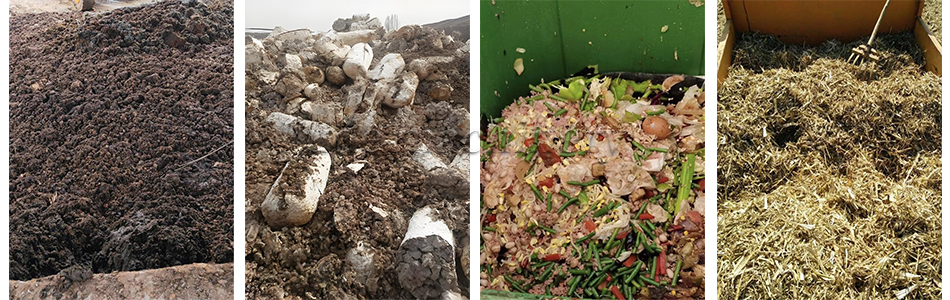
Moderately Moist Organic Compost: It can handle compost that has been partially dried but still contains some lumps.
It is NOT the right choice for:
Very Wet, Sticky Materials: For fresh manure or sludge with high water content, our Semi-Wet Material Crusher is the non-clogging solution.
Tough, Fibrous Raw Waste: For materials like corn stalks, straw, or green waste, you need the shredding power of our Bio-Organic Waste Crusher.
2025 Trends and Innovations in Chain Crusher Technology
As we look towards 2025, the evolution of the chain mill crusher is focused on enhancing durability and operational safety. At Fude Machinery, our engineers are continuously innovating. A primary area of development is in metallurgy. We are implementing the use of advanced manganese steel and chromium alloy chains. These new materials offer significantly higher resistance to abrasion and impact, which means the chains last up to 50% longer than traditional ones, even when processing abrasive materials.
Another key trend is the improvement of the machine’s body and safety features. Our newer models feature reinforced steel casings with replaceable internal wear liners. This means that instead of the whole body wearing out over time, you can just replace a simple liner, effectively extending the machine’s total lifespan. We are also incorporating better seals on the rotor bearings and access doors to minimize dust leakage, creating a cleaner and safer work environment for your team.
Frequently Asked Questions
Question 1: What is the main difference between a chain mill crusher and a hammer crusher? The main difference is the crushing component. A chain mill crusher uses high-strength, wear-resistant steel chains that swing to smash materials. A hammer crusher uses solid metal hammers. Chains are often better for materials that are slightly sticky or prone to caking, as they are less likely to get clogged.
Question 2: Can a chain mill crusher handle wet materials? It can handle materials with moderate moisture content, which is common in compound fertilizer production. However, for very wet and sticky materials like fresh compost or sludge, we recommend our specialized Semi-Wet Material Crusher to avoid any risk of clogging.
Question 3: How often do the chains need to be replaced? The lifespan of the chains depends on the hardness and abrasiveness of the material you are crushing. For standard fertilizer materials, they last a long time. The good news is that they are inexpensive and very easy to replace, minimizing your maintenance downtime and costs.
Question 4: What is the output size of the crushed material? The output size is typically a fine powder suitable for granulation, usually below 3mm. The design ensures a consistent particle size, which is crucial for producing high-quality, uniform fertilizer granules in the next stage of your production line.
Summary and Recommendations
The chain mill crusher is a simple, powerful, and indispensable tool for any serious fertilizer producer, especially those making compound or NPK fertilizers. Its ability to reliably break down lumpy materials and recycle oversized granules makes it a true workhorse that keeps your production line moving smoothly. Its low maintenance requirements and inexpensive wear parts make it a smart, cost-effective investment.
If your process involves blending powdered materials that clump, or if you need an efficient way to deal with returned granules from your screener, the chain mill crusher is almost certainly the right machine for you. We recommend you contact our engineering team to discuss your specific materials and production capacity. We can help you select the perfect size and model to integrate seamlessly into your plant.
About Fude Machinery
We are Fude Machinery, a specialized B2B manufacturer of organic and compound fertilizer equipment located in Zhengzhou, China. Since 2015, we have been providing factory-direct sales and customized solutions to clients in over 120 countries. Our hands-on manufacturing approach and dedicated team of 15 engineers ensure that you receive robust, high-performance equipment designed for the real-world demands of your business.
Ready to eliminate lumps and boost your efficiency? Contact us today for a free consultation and a detailed quote on a chain mill crusher tailored to your production line.
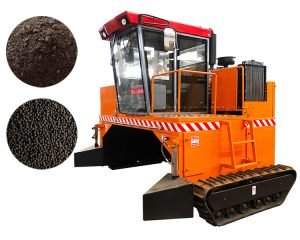
The tracked turning machine is mainly achieved through its unique working principle and structural design in the process of fermenting and turning fertilizers. The following is a detailed explanation of the fermentation and fertilizer throwing pr...
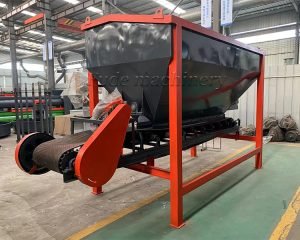
Forklift feeding bins and belt conveyors each have their unique advantages and disadvantages in the field of material conveying. The following is a detailed comparison: Forklift feeding silos and belt conve...
The development trend of organic fertilizer production lines in 2024 shows a positive trend, mainly due to the improvement of environmental awareness, the demand for sustainable agricultural development, and strong policy support. The follow...
You should choose a rotary dryer machine because it is the most reliable, cost-effective, and versatile solution for producing high-quality fertilizer. At Fude Machinery, we have seen this time and again since we started in 2015. This machine is ...
 Organic fertilizer equipment,organic fertilizer production line,organic fertilizer equipment factory