You have piles of valuable organic compost. But it is in a raw, bulky form. You want to turn it into a high-value, easy-to-use product. The key is to granulate organic fertilizer. This process transforms your compost into uniform, dense pellets.
At Fude Machinery, we specialize in this transformation. Granulation makes your product professional, profitable, and exactly what farmers are looking for. It is the most critical step in creating a commercial fertilizer.
This guide will walk you through the entire process, step by step, from raw compost to bagged product. You will learn the essential equipment and the reasons behind each stage.
Step 1: Why Must You Compost Before You Granulate?
You must first compost your organic material to kill harmful pathogens, break down the raw organic matter, and create a stable, nutrient-rich base. You should never try to granulate raw, unfermented waste.
This first step is non-negotiable for producing safe and effective organic fertilizer. Fresh animal manure or plant waste contains harmful bacteria like E. coli and salmonella. It is also full of weed seeds. If you put this raw material directly on crops, you would spread disease and weeds.
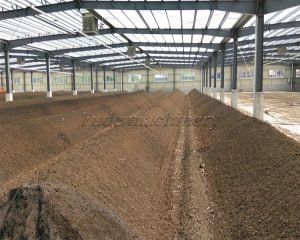
The composting process solves this. During aerobic composting, millions of beneficial microorganisms break down the material. This process generates intense heat, often reaching 60-70°C (140-160°F). This sustained heat is like a natural sterilization process. It effectively kills pathogens and weed seeds.
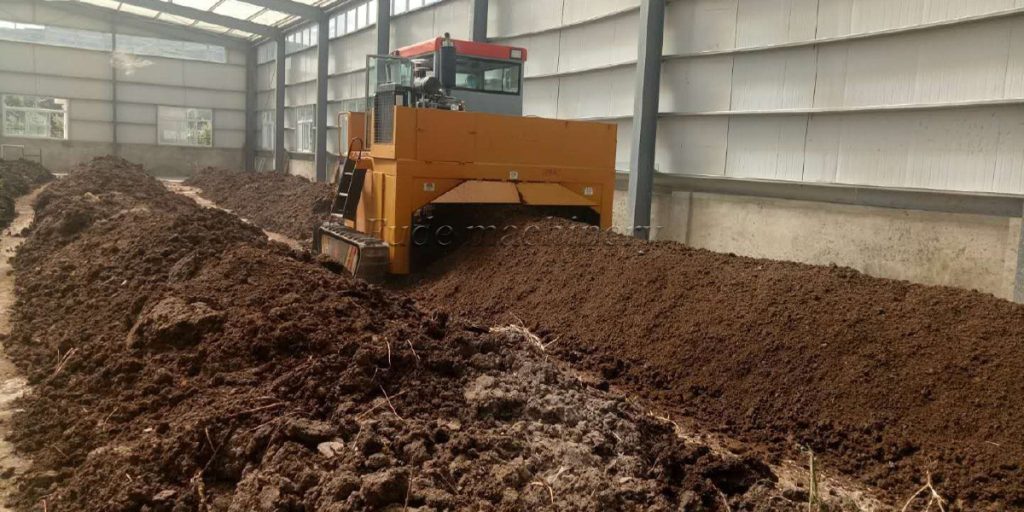
Furthermore, raw manure has an unstable nutrient balance. For example, it can release large amounts of ammonia, which is toxic to plant roots. Composting stabilizes these nutrients. It converts them into a slow-release form that plants can safely absorb. To manage this process efficiently, you need a specialized compost turner.
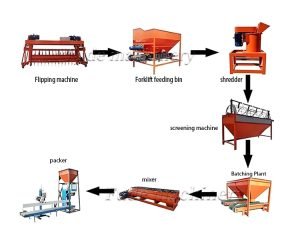
This machine flips and mixes long piles of compost, called windrows. This action introduces oxygen, which is essential for the aerobic microbes to work quickly. What would naturally take many months of passive decomposition can be completed in just 20 to 30 days with a good compost turner. The final product is a dark, nutrient-stable, and safe material ready for the next step.
Step 2: How Do You Prepare the Material for Granulation?
After composting, you must crush the material into a fine, consistent powder. Then, you can blend it in a mixer to create a perfectly uniform and customized formula.
Your composted material, while safe and stable, will be lumpy and uneven. It is not yet suitable to granulate organic fertilizer. You need a fine powder to create dense, high-quality pellets. This is where the preparation stage comes in.
The material is typically moist and sticky, even after fermentation. If you try to use a standard crusher with a screen, like a hammer mill, it will quickly clog with the damp material. This will bring your entire production line to a halt.
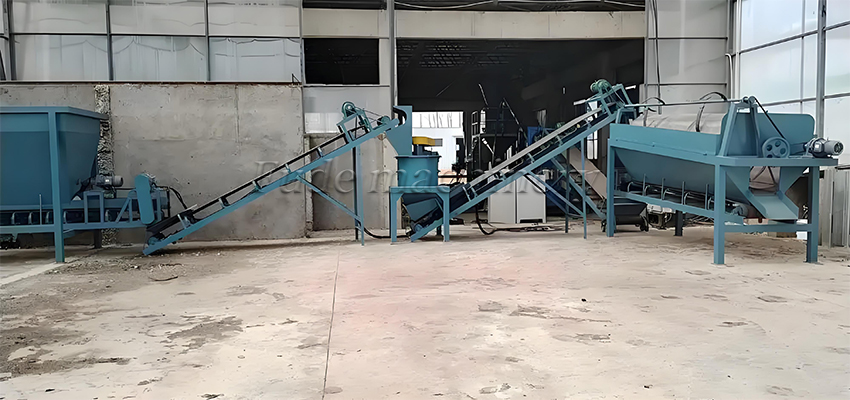
For this reason, we use a specialized semi-wet material crusher. This machine has a screenless design. It uses layers of high-speed chains or blades to pulverize the compost. Because there is no screen to clog, it can handle material with a moisture content of up to 40% without any problems.
It reliably turns your lumpy compost into the fine powder needed for granulation. After crushing, the powder moves to a large horizontal mixer. Here, you can customize your product. You might want to enrich your organic fertilizer with inorganic nutrients like Nitrogen (N), Phosphorus (P), and Potassium (K).
Or you could add beneficial trace elements. The mixer ensures every single particle is blended perfectly. This guarantees that every final granule has the exact same nutrient content.
Step 3: What is the Best Way to Granulate Organic Fertilizer?
The best way to granulate organic fertilizer is to use a machine specifically designed for wet, fibrous, and sticky materials. A New Type Organic Fertilizer Granulator is the ideal choice for this.
This is the core of the entire process. This is where your fine powder becomes a valuable pellet. There are several ways to granulate organic fertilizer, but the unique properties of composted organic matter make one method far superior. You need a machine that can handle the moisture and fiber without clogging and with a high success rate.
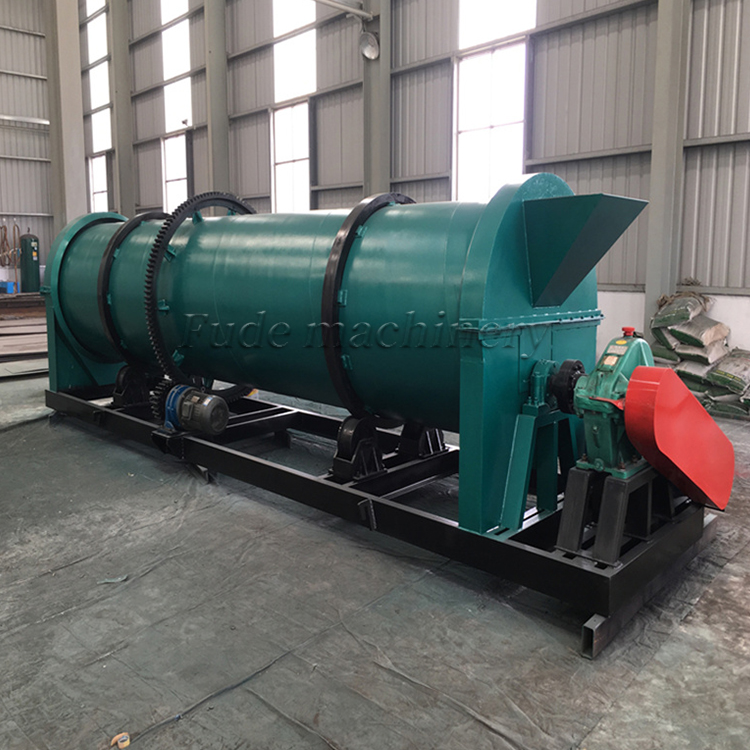
Our New Type Organic Fertilizer Granulator is engineered for this exact purpose. It uses a powerful technology based on high-speed mechanical stirring. Inside the machine’s cylinder, a rotor with rows of hardened “teeth” spins at a high velocity. This creates an intense, swirling force that agitates the moist powder.
The particles are forced to collide and stick together, forming small seed pellets. These small pellets are then continuously compacted and rolled by this mechanical force. They grow in layers, becoming harder and denser. This method is incredibly efficient for organic materials. It reliably achieves a granulation success rate of over 90% in a single pass. This means more of your material becomes a saleable product and less needs to be recycled.
Granulator Type
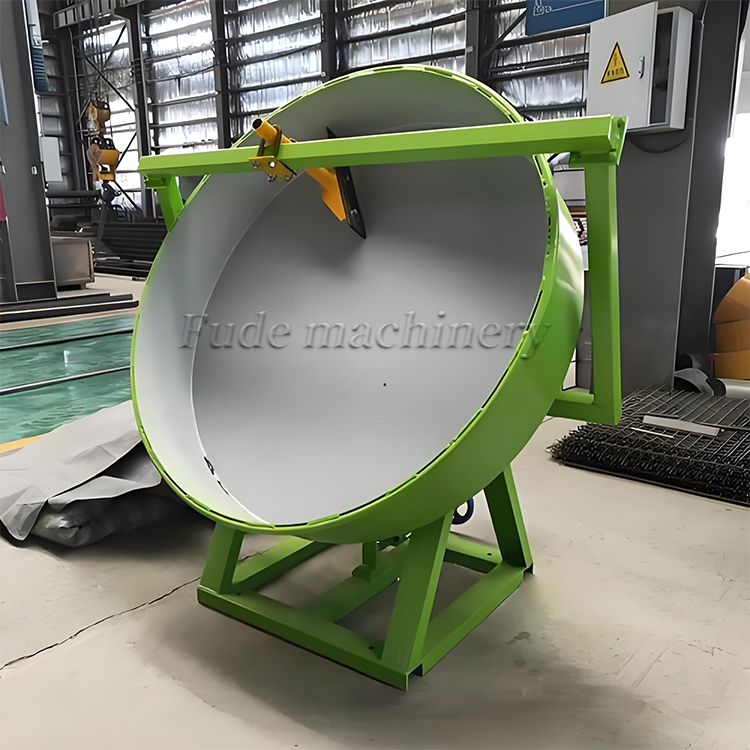
Disc Granulator
New Type Organic Granulator
Why This Matters to You
Principle
Tumbling with water binder
High-speed mechanical stirring force
Better for Fiber. Handles the challenges of organic matter easily.
Success Rate
~75% (Operator dependent)
>90% (Highly consistent)
Higher Output. You produce more finished product per hour, increasing profit.
Granule Quality
Moderate hardness
Very high hardness, round
Better Product. Your pellets will not crumble during shipping or handling.
Step 4: How Do You Finish the Pellets Professionally?
To create a professional, shelf-stable product, you must dry the wet pellets to a safe moisture level, cool them down to prevent caking, and then screen them for a uniform size.
You have successfully created pellets. However, they are not yet ready for sale. They are still warm, moist, and of varying sizes. This finishing stage is what separates a low-quality, amateur product from a professional, commercial-grade fertilizer.
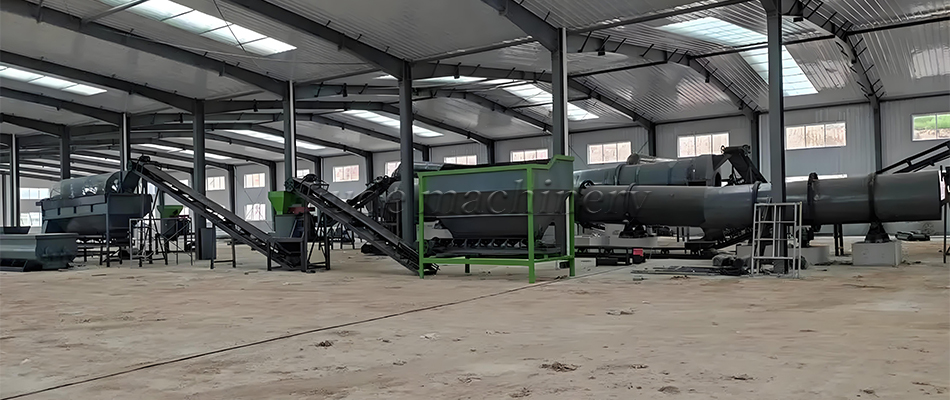
Drying and Cooling: The pellets coming out of the granulator are moist (20-30% moisture) and hot from the friction of the process. You must dry them to below 15% moisture. This prevents mold and ensures a long shelf life. Our production lines use a large rotary drum dryer for this.
Hot air is passed over the tumbling pellets to efficiently remove water. Immediately after drying, the hot pellets enter an adjacent rotary drum cooler. Cool air is brought in to lower their temperature to near ambient levels. This cooling step is critical. If you bag hot pellets, condensation will form inside the bag, causing the pellets to stick together in one giant clump.
Screening: Even with a great granulator, you will have a small percentage of pellets that are too large or too small. A rotary screening machine sorts the finished pellets by size. The correctly sized pellets (the “finished product”) move on to the final packaging stage.
Any oversized pellets are sent to a crusher to be broken up and then recycled back into the granulation machine. Any undersized powder is sent directly back to the granulator. This closed-loop system ensures that you have zero waste and that every bag you sell contains a perfectly uniform product.
Step 5: What is the Final Step to Sell Your Fertilizer?
The final step is to use an automatic packaging machine to accurately weigh your finished pellets and seal them in professionally branded bags. This makes your product ready for storage, transport, and sale.
You have now produced a high-quality, stable, and uniform granular organic fertilizer. The last step is to package it for your customers. Doing this by hand is slow, inaccurate, and unprofessional. An automated solution is essential for any commercial operation. This is where an automatic packaging machine comes in.
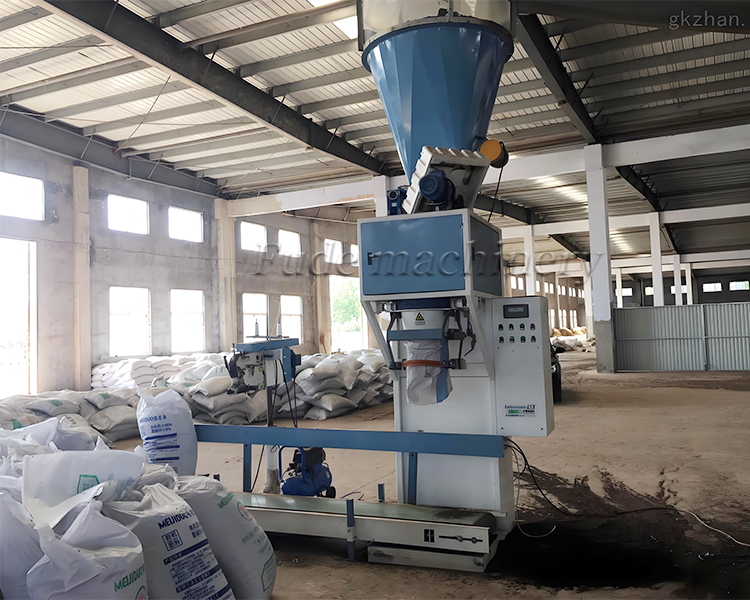
This machine makes the final stage of your production line fast and efficient. An operator simply places an empty bag on the machine’s spout. The machine then automatically weighs a precise amount of fertilizer (for example, 25 kg or 50 kg) and drops it into the bag.
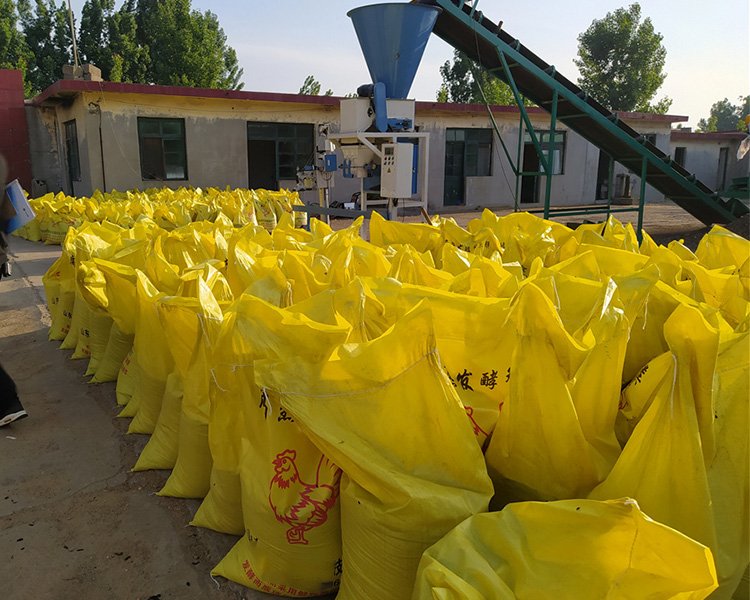
Once filled, the bag is moved along a short conveyor to a heat sealer or sewing machine that closes the bag tightly. This process is very quick, allowing you to package many tons of product per hour. It ensures that every bag sold has the correct weight, which is critical for building trust with your customers. It also gives your product a professional finish, making it ready to be stacked on pallets and shipped to distributors or farms.
Frequently Asked Questions (FAQ)
Question 1: What should the moisture content be before I granulate organic fertilizer? For the wet granulation process using a New Type Organic Fertilizer Granulator, the ideal moisture content of the powdered material is between 25% and 35%. If it is too dry, the pellets will not form well. If it is too wet, it becomes sticky and difficult to handle.
Question 2: Can I skip the drying and cooling step to save money? No, you absolutely should not skip this step. If you bag wet pellets, they will grow mold and become unusable very quickly. If you bag hot pellets, they will cake together into a solid block. Drying and cooling are essential for product quality and shelf life.
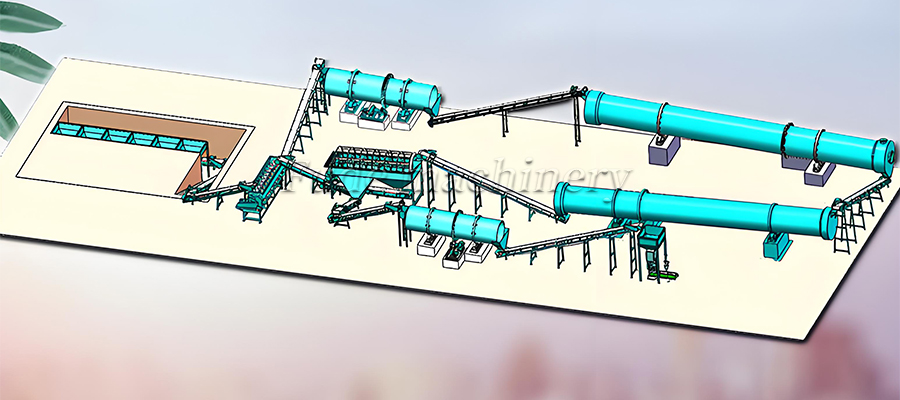
Question 3: How many workers does it take to run a full granulation line? A typical, well-designed organic fertilizer production linefrom Fude Machinery can be operated by 3 to 5 people. This usually includes one person to load the raw material (with a forklift or loader), one or two people to monitor the production line, and one or two people at the packaging machine.
Conclusion: A Clear Path from Waste to Wealth
To granulate organic fertilizer is to follow a clear, logical, five-step process. It begins with essential composting to ensure safety and stability. It continues with crushing and mixing to prepare a uniform powder. The core of the process is using the right granulation machine, like our New Type Granulator, to form hard, round pellets efficiently.
The final, professional touches are added through drying, cooling, screening, and automatic packaging. By following this guide and using the correct equipment for each stage, you can reliably transform low-value organic waste into a highly profitable, in-demand commercial product.
About Fude Machinery We are Fude Machinery, a leading B2B manufacturer of organic fertilizer equipment based in Zhengzhou, China. Since 2015, we have provided factory-direct sales and one-stop solutions to clients in over 120 countries. Our team of 15 dedicated engineers designs robust and efficient equipment to help businesses like yours succeed in the fertilizer industry.
Ready to start your own granulation project? Contact our expert team today for a free consultation. We will help you design the perfect production line for your specific materials and goals.
Agricultural productivity forms the cornerstone of global food security and economic stability. To meet the ever-growing demands for high-quality crops, advancements in fertilizer technology become imperative. How can a 10 t/h NPK granulatio...
Multi-functional feed pellet machine is mainly a animal feed processing machine with corn, rice husk, grass, soybean meal, straw and other crushed materials directly pressed into pellets. It is widely used in small, medium and large aqu...
To meet the fertilizer production needs of Venezuelan customers, we provide a 10 tons/hour disc granulation line. This production line is well designed, integrating advanced technology and efficient equipment, aiming to help customers achieve hig...
Organic fertilizer production lines are sold and applied globally due to their environmental friendliness and high efficiency. Specifically, the following are some countries where organic fertilizer production lines are sold and their related sit...
 Organic fertilizer equipment,organic fertilizer production line,organic fertilizer equipment factory