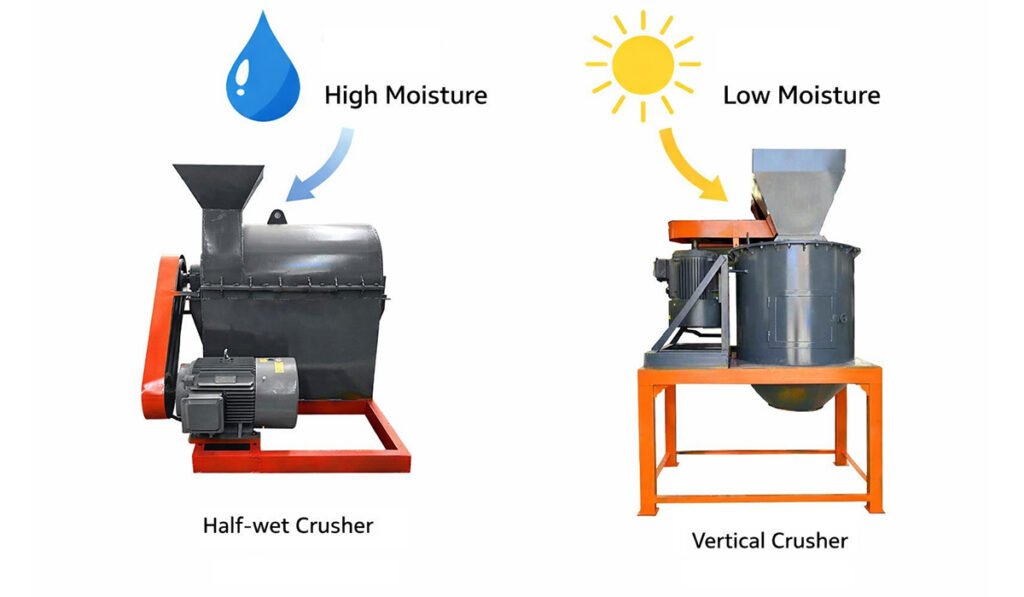
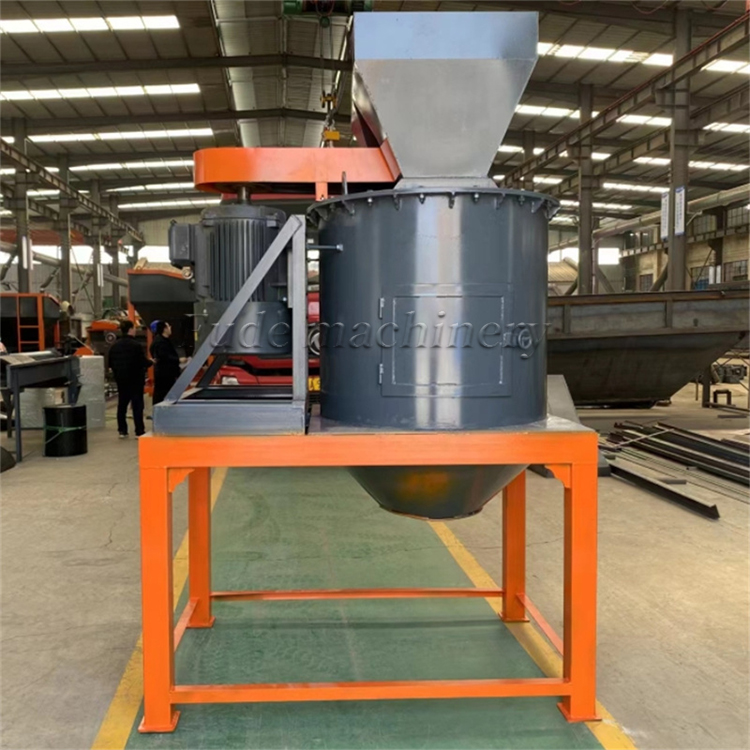
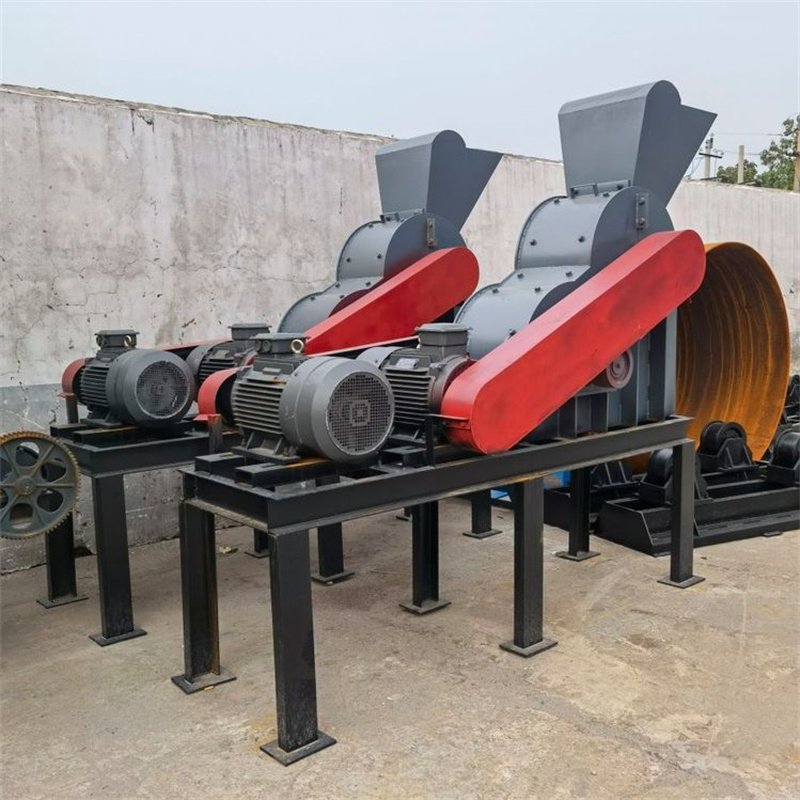
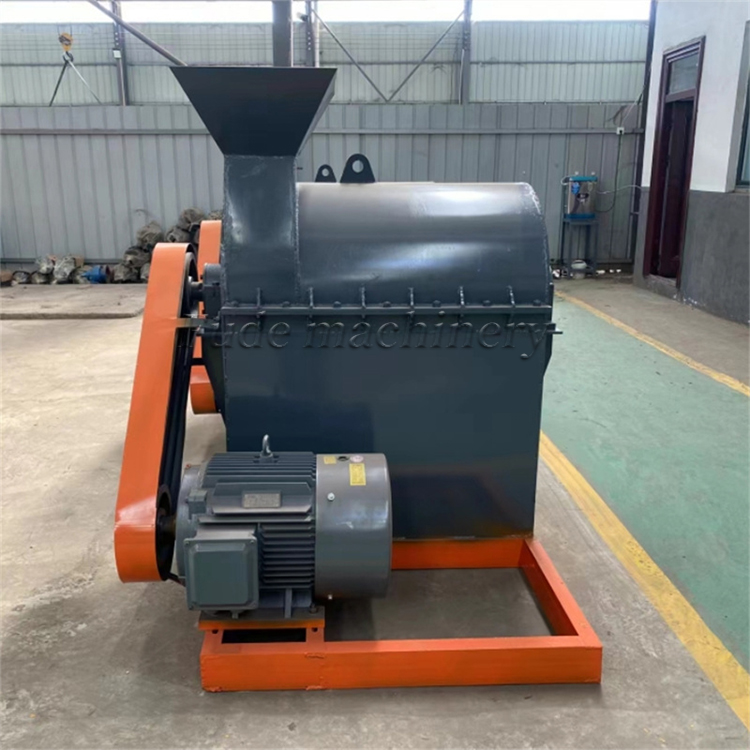
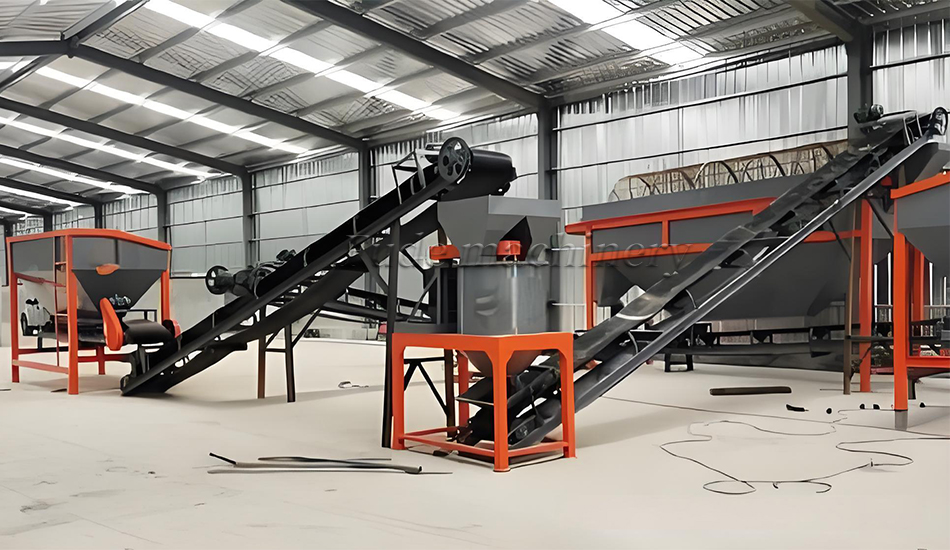
As a manufacturer of fertilizer equipment, we talk to producers like you every day. We know the biggest source of frustration in an organic fertilizer plant is not complicated chemistry; it is a clogged crusher. If you are constantly stopping your production line to clean out sticky, wet material, you are losing valuable time and money. The solution is a machine specifically built for this challenge: the high moisture materials crusher. This machine is the heart of a reliable production line. It is designed to never clog.
Why Does Your Standard Crusher Fail With Wet Materials?
The root cause of clogging is a simple design flaw: a standard crusher uses a screen to control particle size, but this screen cannot handle moisture. Think about a kitchen sieve. If you pour dry flour through it, it works perfectly. But if you try to push wet dough through it, you get a sticky, impassable mess. This is exactly what happens inside a standard hammer mill or cage crusher when you feed it wet compost or fresh manure. The material’s moisture and natural stickiness cause it to plaster itself against the screen openings. Within minutes, the screen is completely blocked.
This blockage stops your entire production line. It puts immense strain on the motor, which can lead to costly burnouts. You then have to shut everything down for a manual, time-consuming cleanout. Many new fertilizer producers make this mistake. They buy a crusher designed for dry, brittle materials and then wonder why it constantly fails. The problem is not your material; it is that you are using the wrong tool for the job. You need a high moisture materials crusher designed with this specific challenge in mind.
What Is the Secret Behind the Clog-Proof Design?
A high moisture materials crusher is clog-proof because it has no screen at the bottom. This is the fundamental, game-changing innovation. Our engineers at Fude Machinery solved the problem by completely removing the part that causes it. Instead of relying on a screen, this machine uses a powerful dual-rotor system to pulverize material in mid-air. This ensures you get a fine, consistent powder without any risk of blockage.
Here is a simple breakdown of how this superior process works:
Dual-Rotor System: The crusher has two horizontal rotors fitted with hardened steel hammer heads. These two rotors spin in opposite directions at very high speeds.
In-Air Pulverization: As your wet, lumpy material enters the chamber from the top, it is struck repeatedly by the hammers on both rotors. The material is shattered and pulverized in the space between the rotors.
Gravity Discharge: Because there is no screen at the bottom, the fine powder that is created simply falls straight through the machine and onto your conveyor belt. The process is continuous and unstoppable.
This screenless, dual-action design is the reason the high moisture materials crusher can handle materials that are up to 50% wet. It turns your biggest production bottleneck into your most reliable process.
Which Materials Absolutely Require This Special Crusher?
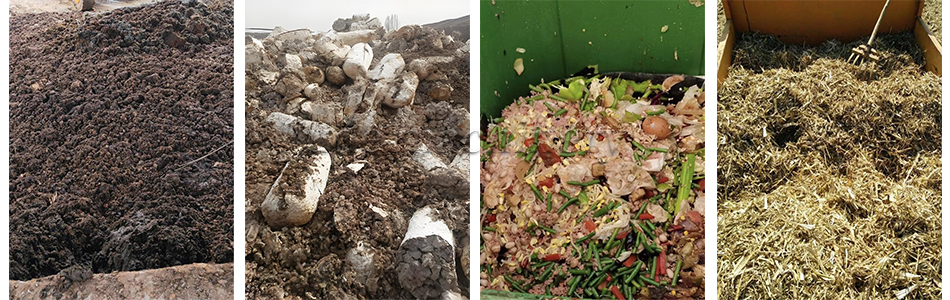
If your raw material is organic and has a moisture content above 20%, a high moisture materials crusher is not just recommended—it is essential. This machine is the cornerstone of any operation that deals with naturally wet and sticky organic matter. Attempting to use a standard crusher for these materials will only lead to constant shutdowns and frustration.
We have built this specialized high moisture materials crusher for clients processing a wide range of challenging inputs:
Fresh Animal Manure: Raw manure from cattle, chicken, and pig farms is a prime example. It is nutrient-rich but very wet and difficult to handle.
Compost After Fermentation: Even after going through the initial composting process in a compost turning machine, the material is still damp and clumpy.
Municipal Sewage Sludge: Sludge from wastewater treatment plants is a valuable organic resource, but it is notoriously wet and sticky.
Food Industry Waste: Byproducts like fruit pulp, vegetable scraps, and filter mud are often saturated with water.
Biogas Digestate: The slurry left over from an anaerobic digester is another high-moisture material that must be crushed before it can be granulated.
For all these materials, our crusher provides the reliable first step needed to prepare them for granulation and final processing.
How Do You Select the Right Crusher Model For Your Farm?
Selecting the right high moisture materials crusher for your farm or plant depends mainly on your required production capacity. As a manufacturer, we offer a range of models to suit different operational scales, from small farm-based projects to large commercial fertilizer plants. The core clog-proof technology is the same in all our models. The key difference is the size and power, which determines how many tons of material you can process per hour.
Here is a simplified guide to help you choose the right fit for your operation.
Your Operation Scale
Typical Raw Materials
Required Capacity (Tons/Hour)
Our Recommended Model Type
Small to Medium Farm
Manure from own livestock, crop waste
1-5 TPH
Fude FSW-600/800
Large Commercial Farm
Large volumes of manure, outsourced waste
5-10 TPH
Fude FSW-1000/1200
Dedicated Fertilizer Plant
Diverse sources: sludge, compost, manure
10-20+ TPH
Fude FSW-1400/1600
To get the most accurate recommendation, our engineers will ask you two simple questions:
What is your primary raw material?
How many tons do you need to process each day?
With this information, we can perfectly match a high moisture materials crusher to your needs. This ensures you are not paying for a machine that is too big, nor are you creating a new bottleneck with one that is too small.
How We Customize These Machines for Peak Efficiency?
One of the biggest advantages of working directly with a manufacturer like Fude Machinery is our ability to customize your high moisture materials crusher. We are not just selling a box. We are providing an engineered solution. Our team of 15 engineers works from our 8,000 square meter factory to build machines that integrate perfectly into your existing or planned production line. This customization ensures maximum efficiency and a longer service life for your equipment.
Here are some of the key customizations we regularly perform for our clients:
Custom Motor and Voltage: We can equip your crusher with a motor that matches your local power supply, whether it is 220V, 380V, 415V, or another standard.
Wear-Resistant Hammers: While our standard high-manganese steel hammers are extremely durable, we can use even tougher specialized alloys for customers who process highly abrasive materials like sludge with sand content.
Integrated Inlet/Outlet: We can design the input hopper to be wider for a skid steer loader or taller to connect to an overhead conveyor. We will also match the outlet to your conveyor belt for a seamless material flow to your fertilizer granulating machine.
This factory-direct flexibility is why producers in over 120 countries trust us. We build the machine that is right for you.
Frequently Asked Questions
Question 1: What is the main cause of clogging in a compost crusher? The main cause is using a crusher with a screen to process high-moisture materials like fresh compost or manure. The wet, sticky material plasters itself to the screen, creating a blockage. The solution is a specialized high moisture materials crusher that has a screenless design.
Question 2: What is a high moisture materials crusher? It is a specialized pulverizer, also known as a semi-wet material crusher, designed specifically for wet, sticky organic materials. It uses a unique dual-rotor, screenless system to crush materials in mid-air, preventing clogs and ensuring continuous, reliable operation.
Question 3: What is the ideal moisture content for this crusher? This crusher performs exceptionally well with materials that have a moisture content between 20% and 50%. This makes it perfect for raw animal manure, fresh compost, municipal sludge, and other organic wastes that are too wet for standard crushers.
Question 4: Can I get a crusher customized for my specific production line? Yes. As a direct manufacturer, Fude Machinery can customize your high moisture materials crusher. Our 15 engineers can adjust the motor size, capacity, and materials of construction to perfectly match your output needs and the specific type of material you are processing.
Summary and Recommendations
If your organic fertilizer production is suffering from constant shutdowns due to a clogged crusher, the problem is your equipment, not your material. The solution is to invest in a high moisture materials crusher. Its intelligent screenless, dual-rotor design is the only proven technology to reliably process the wet, sticky inputs that are common in our industry. This machine will transform your biggest headache into a smooth, efficient, and continuous process.
Our recommendation is clear. Do not struggle with a standard crusher that was never meant for your materials. At Fude Machinery, we build the right tool for the job. By working with us, you get a durable, customized machine directly from the factory. This is the smartest investment you can make to build a truly profitable and trouble-free fertilizer business.
About Fude Machinery
We are Fude Machinery, a specialist manufacturer of organic fertilizer equipment based in Zhengzhou, China. Since 2015, our 8,000 m² factory and team of 15 engineers have been dedicated to producing high-quality, customizable machinery for the global market. We have exported our solutions to over 120 countries, providing factory-direct pricing and full-service support for every stage of fertilizer production.
Stop letting clogs control your production schedule. Contact our expert team today for a free consultation and a quote on a high moisture materials crusher that is built to perform.
Optimizing the pig manure drying process is crucial for industries dealing with high moisture organic wastes. Efficient water reduction not only improves the quality of the final product but also enhances environmental sustainability. Understand...
I frequently receive questions about organic fertilizer, particularly why granulating it is crucial and how to select suitable equipment. Granulation significantly enhances fertilizer quality, making it user-friendly and more valuable. Choosing t...
The laboratory disc granulator, as a commonly used granulation equipment, has a wide range of applications in scientific research and experimental environments. The following is a detailed analysis of its advantages and disadvantages: advanta...
Drum pelletizing is the fundamental process for large-scale production of compound fertilizers. Its advantages in terms of process characteristics, equipment selection and production optimization are described below. It has significant advantage...
 Organic fertilizer equipment,organic fertilizer production line,organic fertilizer equipment factory