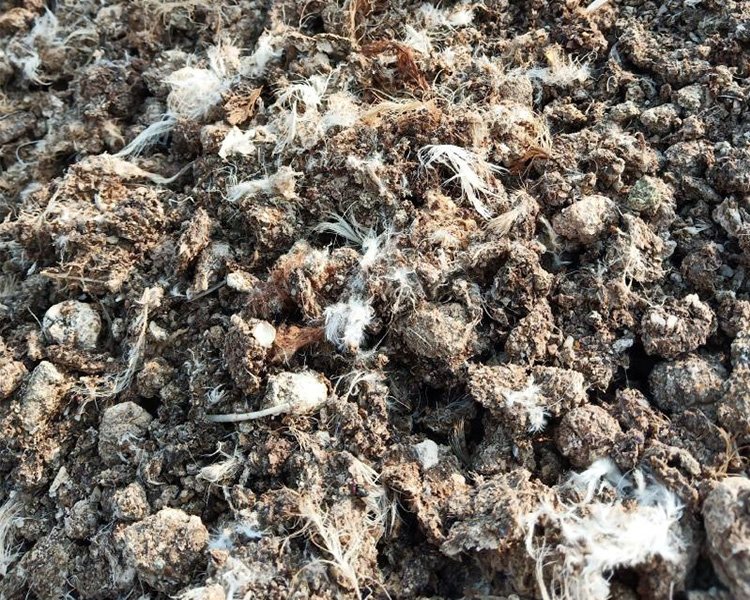
Choosing the right fertilizer crusher is the first and most important step to creating a high-quality product. Your raw material, especially after composting, is never perfectly uniform. It has clumps, lumps, and oversized pieces. If you feed this inconsistent material into the rest of your production line, you will get inconsistent results. At Fude Machinery, we see this as the foundation of your entire process. A good crusher prepares your material for success.
Why Can’t You Just Skip the Crushing Step?
You cannot skip the crushing step because inconsistent material size is the enemy of efficient fertilizer production. Feeding lumpy, uneven material directly into your mixer or granulator will cause a chain reaction of problems. The larger clumps will not mix evenly with other ingredients. Your granulator will struggle to form uniform pellets, resulting in a product with a wide range of sizes. This looks unprofessional and can even cause issues for farmers using mechanical spreaders.
Worse, large clumps can cause blockages and put extra strain on your other equipment, leading to downtime and expensive repairs. A fertilizer crusher is your insurance policy against these problems. It acts as a gatekeeper, ensuring that only fine, consistent powder moves forward in your production line. This simple preparatory step makes every subsequent stage—mixing, granulating, and drying—run more smoothly and efficiently. It is a small investment that protects your larger investment in the rest of the line.
What’s the Most Important Factor in Choosing a Fertilizer Crusher?
The single most important factor is the moisture content of your raw material. This is more important than the material type, the desired output size, or almost anything else. Materials behave completely differently when they are wet versus when they are dry. A machine that works perfectly for dry, brittle materials will instantly clog and become useless if you try to feed it wet, sticky compost.
This is the most common mistake we see new producers make. They buy a standard crusher without considering their material’s moisture, leading to constant frustration and production halts. As a manufacturer with our own factory and 15 engineers, we have developed specialized fertilizer crusher models specifically designed for different moisture levels. Understanding your material’s moisture is the first question we will ask you because it dictates the entire design of the right machine for your job.
Which Fertilizer Crusher Is Best for Wet & Sticky Materials?
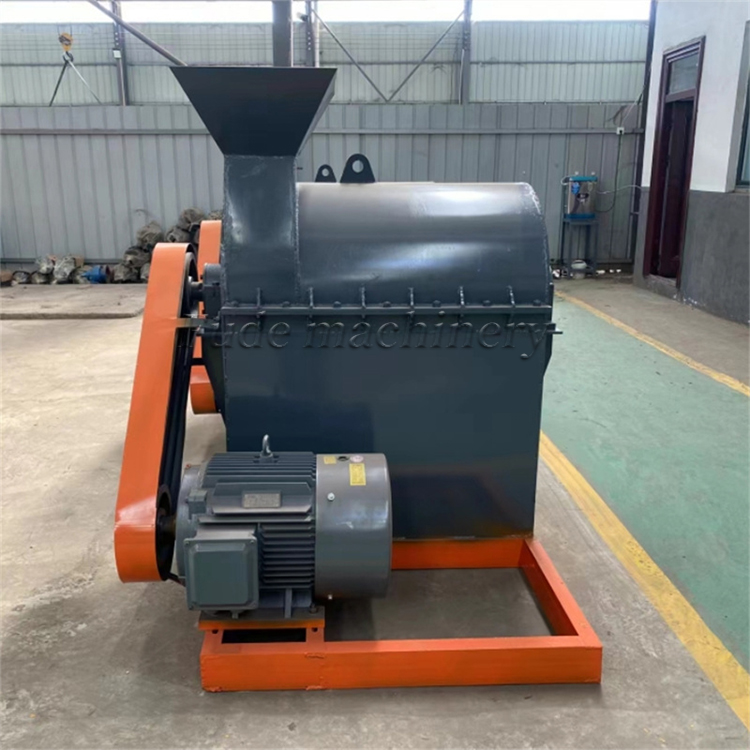
For wet, sticky materials like fresh compost, animal manure, or sludge, our Semi-Wet Material Crusher is the best choice. This machine is a game-changer for organic fertilizer producers. Standard crushers use a screen or sieve at the bottom to control the output size. This screen is what clogs instantly when faced with sticky material. Our semi-wet crusher has no screen.
Instead, it uses two sets of high-speed rotating blades or chain hammers that work against each other. The material is pulverized in mid-air through impact. The fine powder then falls straight through the open bottom. This screenless design is the key to its non-clogging performance. It is specifically engineered to handle materials with moisture content as high as 20-50%, making it the perfect starting point for most organic fertilizer production lines.
Comparing Crushers for High-Moisture Materials
Crusher Type
Working Principle
Best For
What This Means For You
Semi-Wet Material Crusher
High-speed impact from opposing rotors
Very wet, sticky materials (manure, compost, sludge)
No Clogging. You can crush material directly after fermentation.
Chain Crusher
High-speed chains smashing material
Lumpy but less sticky materials (e.g., NPK fertilizer)
A good, lower-cost option if your material is not extremely sticky.
What Is the Best Crusher for Dry or Brittle Materials?
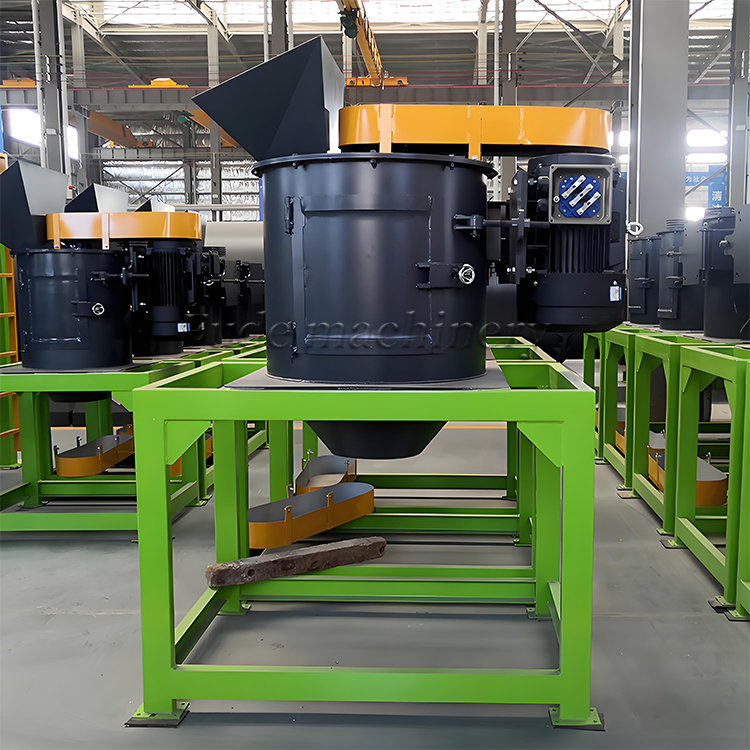
For dry materials like chemical powders, minerals, or fully dried organic matter, a Vertical Crusher or a Hammer Crusher is the most efficient choice. These machines work on the principle of high-speed impact against a hard surface. A vertical crusher uses a series of chains or blades that spin rapidly inside a cylindrical casing, smashing the material against the walls until it is a fine powder. A hammer crusher uses swinging metal hammers to do the same thing.
These types of fertilizer crusher are highly effective and energy-efficient for dry materials. They can produce a very fine, consistent powder. However, they rely on a screen at the bottom to control the final particle size. This is why they are completely unsuitable for wet materials. If you are producing compound NPK fertilizer from dry chemical powders or need to re-crush oversized granules after the drying process, these machines are the perfect solution.
How Do We Customize a Crusher for Your Production Line?
We customize every fertilizer crusher because we know a standard model is never a perfect fit. As a direct manufacturer, we have the flexibility in our 8,000-square-meter workshop to modify our designs to meet your exact needs. This ensures better performance, longer machine life, and seamless integration with your other equipment. Our engineers will discuss your specific situation and make adjustments accordingly.
This customization process is a core part of our full-service support. We consider factors beyond just the machine itself, looking at how it fits into your overall workflow.
Capacity Matching: We can adjust the motor size and the physical dimensions of the crusher to perfectly match your desired output in tons per hour.
Material Compatibility: If you are processing corrosive chemical materials, we can build the crusher’s internal components from high-grade stainless steel to prevent rust and extend its life.
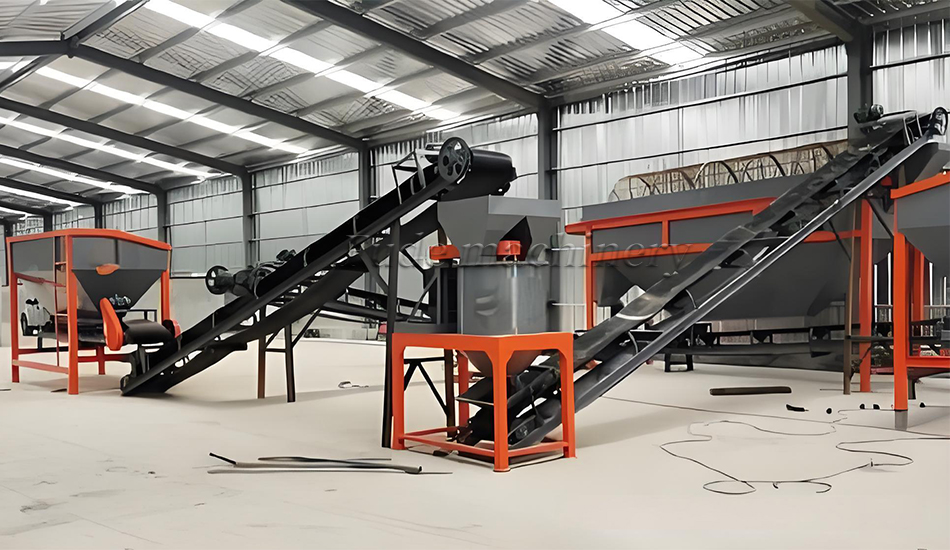
System Integration: We will customize the size and position of the inlet and outlet ports to connect perfectly with your conveyor belts, eliminating bottlenecks and spillage.
Frequently Asked Questions
Question 1: What is the main function of a fertilizer crusher? The main function of a fertilizer crusher is to break down lumpy or caked raw materials into a fine, consistent powder. This is a critical step before mixing and granulation, as it ensures a uniform final product and prevents other machines from clogging.
Question 2: Can one crusher handle both wet and dry materials? Generally, no. Crushers are specialized. A semi-wet material crusher is designed specifically for high-moisture materials and will not clog. A hammer or vertical crusher works best for dry, brittle materials but will clog badly with wet, sticky compost.
Question 3: How much maintenance does a fertilizer crusher require? Maintenance is relatively simple. The most important task is to regularly check and replace the wearing parts, such as the hammers or chains, as they will wear down over time. Regular lubrication of the bearings is also necessary. Our designs allow for easy access to these parts.
Question 4: What happens if I don’t use a crusher? If you don’t use a fertilizer crusher, you will likely face many problems. Your granulator will produce uneven, low-quality granules. Your equipment may clog frequently, leading to costly downtime. The overall efficiency of your production line will be very low.
Summary and Recommendations
Choosing the right fertilizer crusher comes down to one simple rule: match the machine to your material’s moisture. For the wet, sticky materials common in organic fertilizer production, a screenless design like our Semi-Wet Material Crusher is essential. For dry, brittle inputs, a vertical or hammer crusher is more efficient.
Our strongest recommendation is to consult with an experienced equipment manufacturer before you buy. As a one-stop solution provider with over a decade of experience, we can help you analyze your materials and design a crushing system that is both effective and cost-efficient. Making the right choice at this first stage will save you countless hours of frustration and will set your entire production line up for success.
About Fude Machinery
We are Fude Machinery, a leading Chinese manufacturer of organic fertilizer equipment. Since 2015, we have specialized in providing customized, factory-direct solutions to clients in more than 120 countries. Our comprehensive product line covers every stage of production, and our team of 15 engineers is dedicated to designing the most reliable and efficient equipment for your specific needs.
Contact us today for a free consultation. Our experts will help you select the perfect fertilizer crusher and design a complete system that turns your raw materials into profit.
Various industries can benefit from using a 3T/H roll extrusion granulation line to produce NPK fertilizer pellets. The agriculture sector, for instance, often uses raw materials such as ammonium nitrate, ammonium sulfate, urea, and p...
I speak with farm owners and fertilizer producers every single day. I know that the biggest headache in organic fertilizer production is dealing with wet, sticky compost. Materials like fresh chicken manure or municipal sludge are notoriously dif...
The working principle of the roller granulator mainly involves two main processes: material extrusion and granulation. The detailed explanation is as follows: The roller granulator uses two relatively rotating rollers to extrude the material...
As the global community increasingly embraces sustainable practices, organic fertilizer granulators are emerging as pivotal tools in modern agriculture. These machines convert organic waste into nutrient-rich granules, providing a sustainable alt...
 Organic fertilizer equipment,organic fertilizer production line,organic fertilizer equipment factory