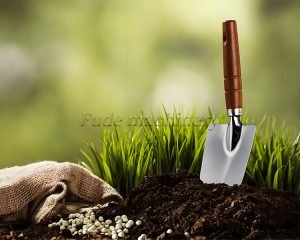
Agricultural productivity forms the cornerstone of global food security and economic stability. To meet the ever-growing demands for high-quality crops, advancements in fertilizer technology become imperative. How can a 10 t/h NPK granulation line significantly improve agricultural productivity?
What Raw Materials Are Suitable for the Extrusion Granulation Line?
Choosing appropriate raw materials is crucial for the efficiency and effectiveness of the 10 TPH NPK fertilizer granulation line. The key materials include urea, ammonium sulfate, monoammonium phosphate (MAP), diammonium phosphate (DAP), and potassium chloride. Each of these materials serves specific needs across various agricultural sectors.
Urea and Ammonium Sulfate: These nitrogen-rich compounds are essential for vegetative growth. Urea provides a high nitrogen content that boosts leaf development, while ammonium sulfate aids in soil acidification and improves nutrient uptake.
Monoammonium Phosphate and Diammonium Phosphate: These phosphate-rich materials are indispensable for root development and flowering. MAP offers a balanced nutrient supply, promoting vigorous root systems. DAP, with its high phosphorus content, supports flowering and fruit setting.
Potassium Chloride: This material is vital for overall plant health and resistance to diseases. Potassium chloride enhances water retention, strengthens cell walls, and improves drought resistance.
How Does Each Industry Benefit from Specific Raw Materials?
Different agricultural sectors have unique requirements, and the choice of raw materials directly impacts productivity.
Crop Farming: Nutrient-rich fertilizers like urea and MAP cater to the high nutrient demands of crops like corn, wheat, and rice. These fertilizers enhance yield and improve crop quality, thereby supporting food security.
Horticulture: Fruits and vegetables benefit immensely from ammonium sulfate and potassium chloride. These fertilizers ensure robust growth and higher resistance to pests, which are crucial for producing high-quality, marketable produce.
Ornamental Plants: DAP and MAP are particularly beneficial for ornamental plants, promoting lush foliage and vibrant blooms. These fertilizers help in producing aesthetically pleasing plants that are in high demand for landscaping and decorative purposes.
What Are the Key Features of the Equipment?
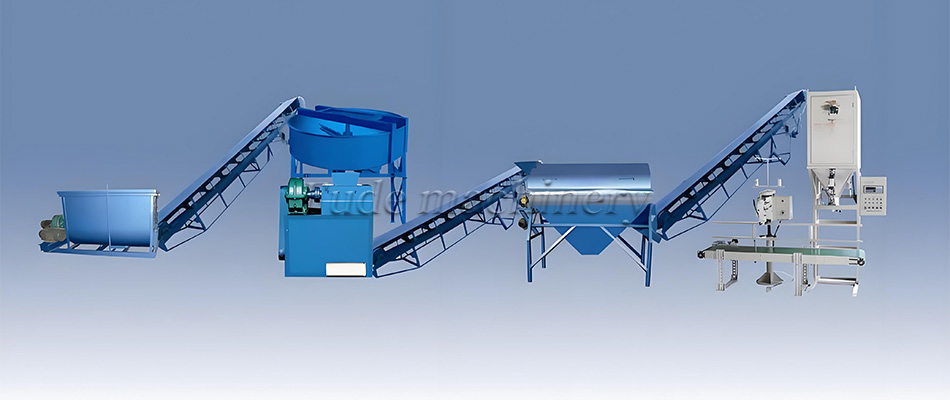
The 10 t/h NPK granulation line comprises several advanced machines designed to optimize the granulation process.
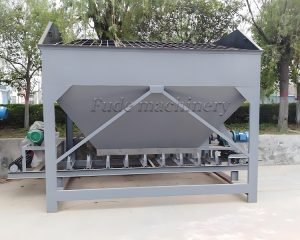
Loader Type Feeder: This feeder ensures a consistent supply of raw materials to the granulator, enhancing operational efficiency.
Crain Crusher: The crusher breaks down larger raw materials into finer particles, ensuring uniform granulation.
Horizontal Mixer: This mixer homogenizes the raw materials, ensuring a consistent nutrient composition in each granule.
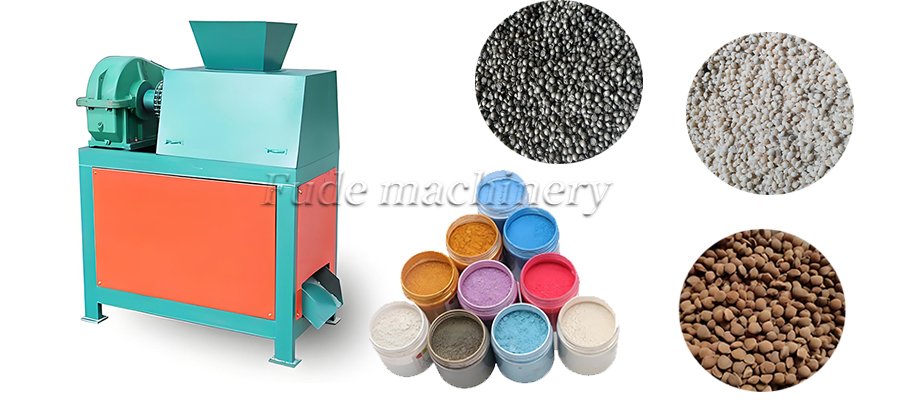
Double Roller Extrusion Granulator: Also known as a press or compact granulator, this machine uses mechanical pressure to form the granules, eliminating the need for drying. It ensures high production rates and uniform granule size.
Rotary Screening Machine: This machine separates the granules based on size, ensuring only the appropriately sized granules proceed to packaging.
Automatic Packaging Scale: This system automates the packaging process, ensuring precise weight measurements and reducing labor costs.
Belt Conveyors: These conveyors streamline the movement of materials between different stages of the granulation process, enhancing overall workflow efficiency.
How Does the Granulation Process Enhance Agricultural Productivity?
The granulation process transforms raw materials into uniformly sized granules, which offer several advantages.
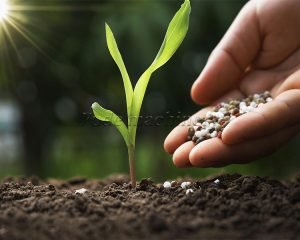
Improved Nutrient Availability: Granules provide a slow-release mechanism, ensuring a steady supply of nutrients over time. This improves nutrient uptake and reduces the frequency of fertilizer application.
Enhanced Soil Health: Granulated fertilizers improve soil structure and promote microbial activity. This fosters long-term soil fertility, supporting sustainable agriculture.
Reduced Environmental Impact: Granules minimize nutrient runoff and leaching, reducing the environmental footprint of farming practices.
In conclusion, a 10 t/h NPK granulation line significantly enhances agricultural productivity by providing high-quality, nutrient-rich fertilizers tailored to the specific needs of various agricultural sectors. A professional fertilizer equipment manufacturer, such as Fude Machinery, offers advanced machinery that ensures efficient and effective granulation, ultimately supporting sustainable farming practices and boosting crop yields.
In the realm of organic agriculture, carbon-based fertilizers have emerged as a key component for enhancing soil fertility and crop yield. Among the various machinery utilized in the production of these fertilizers, the wheel compost turner stand...
The functions of the shovel feeding bin (also known as the shovel bin) are mainly reflected in the following aspects: Forklift feeding bin is a conveying equipment for bulk materials, which can adapt to materials of different particle sizes an...
In the burgeoning realm of sustainable agriculture, bio organic fertilizers have emerged as a cornerstone for eco – friendly farming. To meet the rising demand, our state – of – the – art bio organic fertilizer making system is now available for...
In the flourishing agricultural sector, the demand for high – quality biofertilizers is on the upswing. A 5 t/h powdery biofertilizer production line serves as an efficient solution for manufacturers striving to meet this burgeoning nee...
 Organic fertilizer equipment,organic fertilizer production line,organic fertilizer equipment factory